
- A Buyer's Guide to 28 Voices Worth Knowing; Speakers, Coaches, Workshops, Consultancy
- The internal operating system of leadership
- What this guide is, and what it is not
- The speakers who work on the inner mechanics
- The speakers who teach from extreme experience
- Beyond the keynote
- Frequently asked questions
A Buyer’s Guide to 28 Voices Worth Knowing; Speakers, Coaches, Workshops, Consultancy
The internal operating system of leadership
Across the world, executive teams in almost every large organisation or enterprise are under pressure that does not show any signs of letting up. Margins are tighter than they’ve been for years. Stakeholders and investors want more with less, and they want it faster, and the executives themselves are tired. They’re less patient. They’re quicker to retreat into their own functions. They’re stressed and they’re exhausted.
CHROs, meanwhile, are trying every obvious thing: off-site organisational development programmes, executive development coaching, and none of it seems to work quite in the way they hoped. They want to bring external expertise in, but they need help figuring out who.
Often, the reason it’s so difficult is that the angle they’re approaching the problem from is the wrong one.
“Our leaders need to be more resilient.”
“We need to train our team on how to bounce back.”
“We need to help our workforce be more resilient.“
That’s the angle: resilience. Nowadays, most leadership development seems to be built around this. The problem is that the resilience, as it’s now used in 2026, means “recovery from an event”: a disastrous product launch, a bad quarter, a drop in morale.
But the challenge the executive team is facing is not an event, it’s a continuous state. The global and local challenges we see now show no sign of ending. What leadership teams need is not a way to recover but an approach that helps them to continue functioning and functioning well. To keep making good decisions. To stay present with each other. And to keep their judgement steady under sustained pressure.
When pressure rises, most of us tend to instinctively act as though we know the answer. We reflexively behave confidently, perhaps as much to convince ourselves as to convince those that we lead. In the corporate world, this can end up looking like:
“We know what the market wants.”
“The problem is sales/execution/marketing/AI.”
“This strategy will work if people just get behind it.”
“We don’t have time to debate this.”
“Stakeholders need confidence, so let’s present a firm answer.”
The problem is not confidence. Of course, leaders need confidence. But the danger is false certainty: becoming more committed to sounding sure than to understanding what is actually happening.
Under pressure, leaders need to be able to say, “Here’s what I know. And here’s what I don’t know yet.”
They need to be able to articulate the assumptions they’re making, to explain the risks if those assumptions are wrong, and to share the decisions that they’re making, along with how they expect to test them and what they will do if if that decision needs to change.
That is very different from collapsing complexity into a neat answer just because everyone is anxious.
This is not resilience; this is self-leadership. And by self-leadership, I don’t mean the soft skills version that we all know from junior leadership programmes. This is the senior executive version. This is, as Joy Poole would put it, the internal operating system that determines how clearly the leader thinks, how calmly they make decisions, and how genuinely they keep playing their part when the conditions around them are difficult and all the signs are that those conditions are here to stay, at least for a good while to come.
Self-leadership is about the ability to lead others and it starts with the ability to manage our own inner states. When leaders feel fear, scrutiny, ambiguity, investor pressure, declining numbers, reputational risk, or internal conflict, they often unconsciously reach for certainty as a defence mechanism.
The speakers, coaches and consultants in this guide help leaders work on their internal operating system. Some of them have built explicit frameworks for it – Steven D’Souza’s Not Knowing, Zana Goic Petricevic‘s SOUL Framework, Sarah Furness’s H.A.B.I.T.S., Anna Hemmings’ THRIVE, Pete Cohen’s STOP 2 THINK, Penny Mallory’s MTQPlus.
Others have derived their understanding from conditions most of us cannot imagine: an Antarctic crossing, a landmine clearance, a Tornado cockpit, a solo Atlantic row. Regardless of whether they provide a framework or lead from the experiences they’ve had, they deal with the same problem, only sometimes from different starting points.
And where I’ve found they tend to agree is that the behaviours that help leaders function well under sustained pressure are more about capabilities than character traits.
More precisely, it’s about practised capabilities: ones that are developed through rehearsal, and supported by self-awareness. Each of the people covered in this guide has experience and expertise in helping leaders to build the internal capacity to recognise and resist the delusions that lead to failure when under pressure.
My colleagues and I have organised the speakers in this guide around their work, not the format they deliver in. Some will be the right fit for a keynote. Others will be the right fit for an executive coaching engagement, a workshop, a leadership programme, or longer consultancy. In short, we have grouped them by what they actually do.
What this guide is, and what it is not
This is not a ranked list. It is a working document, edited and updated by us. We have included each of the speakers because their work on self-leadership is among the strongest we know.
If you are a CHRO, Chief People Officer, Head of Leadership Development, or internal programme manager looking to commission external help on this theme, the guide is built for you. If you are an event team booking a single keynote, you will find what you need here too, but you will also find a wider set of options than a keynote-only list would give you. We recommend reading the section above before scanning the names below.
The speakers who work on the inner mechanics
The speakers in this section share an unusual quality. They have all developed their own frameworks for what happens inside the mind of someone under sustained pressure.
Some of their frameworks come from research or clinical practise. Others come from extreme experience that they have taken and shaped into a model. What they all share in common is that their work is transferable. Spend two days with any of these people, and your leaders will leave with vocabulary, structure, and tools, not just a memorable experience or an inspiring story.
These are the people to look to when you want to give your leadership team something that they can take and put into practise immediately.
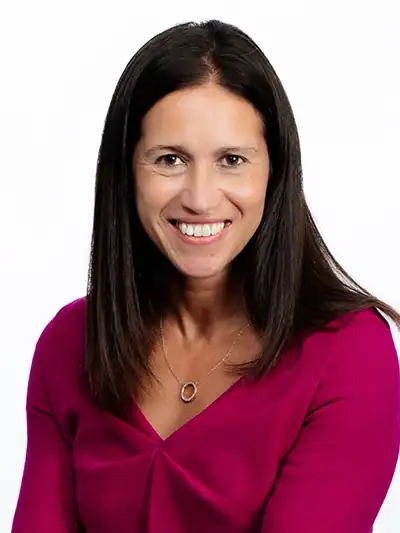
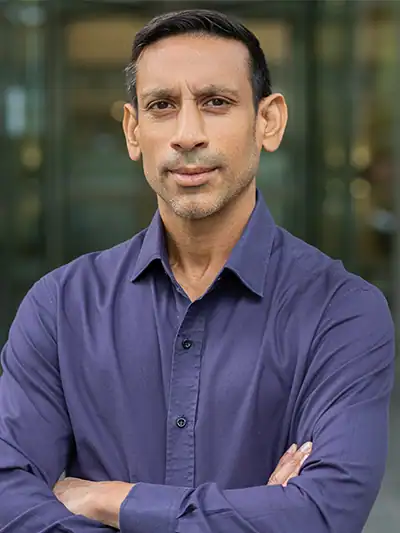

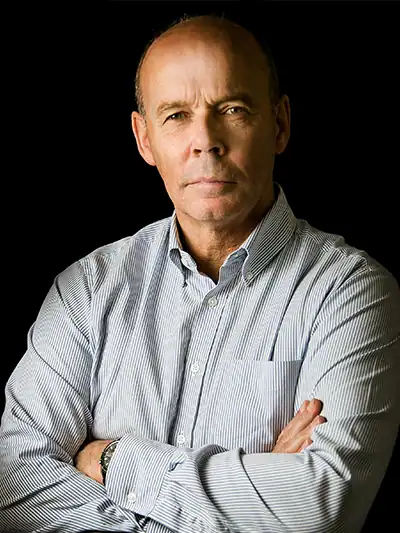

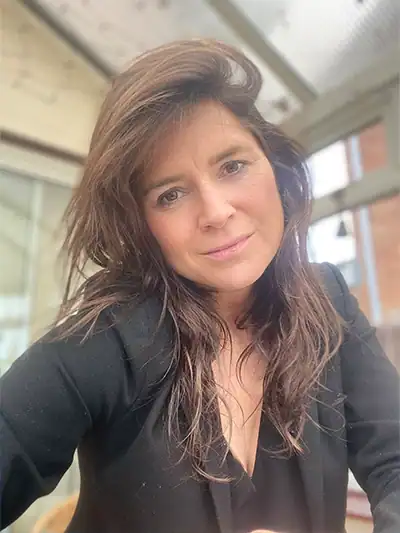

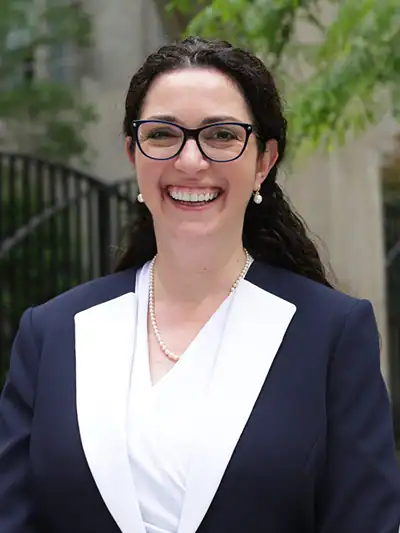

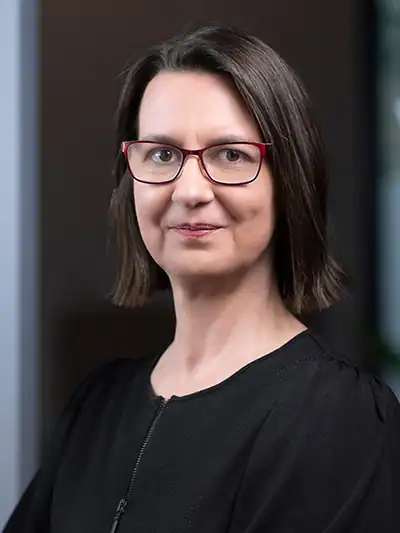
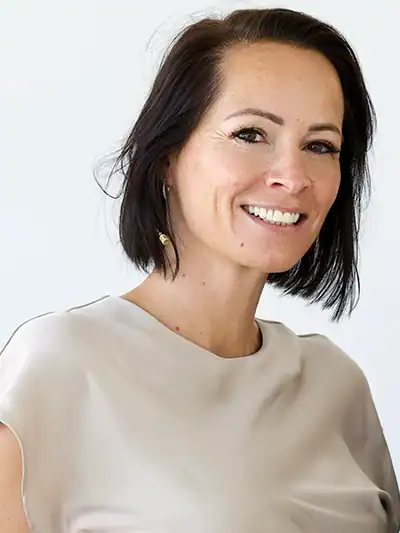

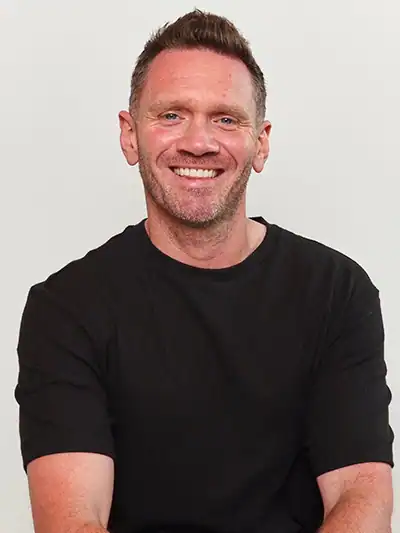
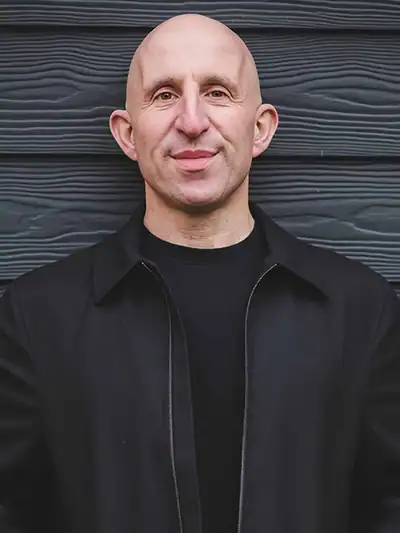
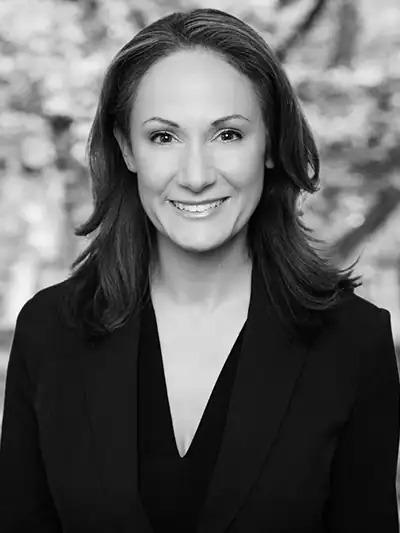

Anna Hemmings MBE
Most performance speakers tell a story about reaching the top. Anna’s argument is about staying there.
She won six marathon kayak world titles and competed at two Olympic Games, but her suitability for this guide is not built on the medals alone. Her work is built on a foundation consisting of her elite sporting career, 15 years as a high-performance leadership specialist, and the specific test she now teaches from; being diagnosed with Chronic Fatigue Syndrome at her peak, told she might not race again, and coming back to win 3 more world titles.
From that she has developed the THRIVE framework, a methodology built for leaders operating under relentless pressure that treats recovery and mental agility as strategic drivers of sustained performance rather than as a wellbeing counterweight to it: a distinction senior leadership teams routinely fail to make.
Since 2009 she has worked with senior leaders and leadership teams at IBM, Unilever, DHL Express, Deloitte, Danone, Novartis, NatWest, and British Airways. She is an accredited high-performance and leadership coach and a certified Five Behaviours of a Cohesive Team facilitator, which means her engagements run cleanly from keynote into masterclass and team development.
She has now spent more years coaching leaders than she spent winning titles. Anna is based in London and is well suited for engagements in the United States, Europe, and the Middle East.
Best for: executive teams under sustained pressure who need to build the capacity to keep performing without burning out; leadership teams entering a multi-year high-performance cycle; CHROs designing programmes where the resilience content needs to land as performance rather than wellbeing.
Steven D’Souza
Steven D’Souza has built an entire body of published work directly on the central claim of this guide – that the pressure to appear confident and behave with certainty, is itself a liability when the environment you’re operating in is unclear and ambiguous.
His book, Not Knowing, co-authored with Diana Renner, who we shall meet shortly, won the CMI Management Book of the Year. It has been translated into more than 15 languages. His two following books, Not Doing and Not Being, complete a trilogy, covering the discipline of purposeful restraint and the work of identity transformation under sustained disruption. His 2025 book Shadows at Work extends into the unconscious patterns that derail otherwise capable leaders.
Steven’s intellectual record is supported by an unusually deep practitioner one: CEO of Liminal Edge Consulting, previously Senior Client Partner in Korn Ferry’s Leadership and Professional Development practice in London and Riyadh, before that Global Head of Leadership and Executive Development at Philip Morris International, VP Leadership and Talent Management at Merrill Lynch, and Head of Diversity at Santander UK. He is a Thinkers50 Radar thinker, named in HR Magazine’s Top 30 Most Influential Thinkers, and an Associate Fellow at Oxford’s Saïd Business School. Steven is based in Dubai and works internationally.
Best for: boards and executive teams leading in uncertainty or navigating major strategic pivots where the senior group needs intellectual structure for what they are going through, not a pep talk; CHROs and Chief Learning Officers designing senior development programmes that require a published, third-party-validated thinker at their centre; long-form executive education and partner-firm investments.
Joy Poole
I already used Joy’s premise in the introduction to this guide: self-leadership is an internal operating system. She says that it is what determines how clearly we think, how calmly we decide, and how genuinely we show up when everything around us is challenging or high pressure and is likely to stay that way for some time.
Joy works both as a keynote speaker and as an executive coach. Her work draws on two decades in senior roles at Meta, Capgemini, and Arthur Andersen companies, where she operated inside the very conditions that she now helps leaders to cope with. She also draws upon her round-the-world sailing circumnavigation, an environment that strips leadership dynamics back to their bare essentials.
Joy’s credentials are practitioner-led: certified at the Institute for Professional Excellence in Coaching, Master Practitioner of the Energy Leadership Index, Transitions Dynamics Specialist, with executive programme certificates from Oxford and the London School of Economics.
She does her best work for leadership teams in fast-paced, high pressure industries such as technology, financial services, and consulting. She customises every engagement. Joy operates internationally from her base in London.
Best for: leadership teams at scale-up technology companies, financial services firms, and consultancies during restructuring or sustained high-growth periods; senior leadership offsites where the brief is grounded and practical rather than motivational.
Sir Clive Woodward
Clive Woodward’s belief is that “culture is not a slide deck”. Rather, it is the specific behaviours that tell you, from the outside, whether the values are real.
And he has proved that argument twice, in very public conditions. As Head Coach of the England men’s rugby union team from 1997 to 2004, he took a team ranked sixth in the world to the 2003 World Cup, the only Northern Hemisphere side to have won the tournament.
As Director of Sport at the British Olympic Association from 2006, he supported Team GB through Beijing, Vancouver, and the most successful modern Games for Britain at London 2012.
The secret? Sir Clive’s underlying framework was Teamship: a written, player-owned set of behavioural standards that became known as the Black Book, running to roughly 240 entries across 35 sections.
Clive has since codified the same approach into Hive Learning, the enterprise learning platform he founded with Blenheim Chalcot in 2012, and now used by Sky, Deloitte, Jaguar Land Rover, PepsiCo, Halma, and the International Olympic Committee.
The tools he has created and named: Teamship, TCUP (thinking correctly under pressure), the DNA of a Champion, and critical non-essentials, are documented in his books Winning! and How to Win.
Knighted in 2004; inducted into the World Rugby Hall of Fame; and IOC Entourage Commission member since 2012, Sir Clive Woodward is based in the UK and is available internationally.
Best for: boards and executive teams running culture change across large, federated organisations; leadership teams that need a working method for writing behavioural standards that the team itself authors and enforces; programmes where the brief calls for a recognised name and a method built on operational evidence.
Zana Goic Petricevic
Zana’s premise is that senior leaders generally know what purposeful, bold leadership looks like, but they fail to deliver it when under pressure, not because they lack the capability, but because their default patterns block them.
Her SOUL Framework®, a trademarked model covered in her book Bold Reinvented, Give a structure to those patterns and a practical method for shifting them. Her second book, Leading on the Edge, extends this argument further.
Zana is a faculty member of CRR Global, a Leadership Circle Ambassador in Europe, and a coach and programme contributor within PwC’s EMEA leadership development network. We have learned from experience that this is the kind of institutional standing that matters when clients are commissioning multi-year work. Her client roster includes TikTok, UniCredit, Sandoz, Zalando, and Capgemini University, where she has opened the Game Changers leadership programme for two consecutive years. She is based in Zagreb and works across the EU and the UK.
Best for: senior leadership teams in technology, banking, pharmaceuticals, and professional services going through significant transformation; long-form leadership development programmes where the framework needs to outlast the keynote; executive coaching engagements for senior teams that need to surface and shift their own default patterns.
Sarah Furness
Sarah Furness knows that most organisations develop capable leaders for normal conditions, and that when those conditions break down the training does not keep pace with the pressure.
Leaders who look strong are often not equipped to feel strong. Performance under pressure is not a personality trait but a trainable skill, and most development programmes do not treat it as one.
Sarah has tested her approach over two decades in the Royal Air Force, first as a Cambridge-educated helicopter pilot, then as a Squadron Leader running combat operations in Iraq and Afghanistan, then as the first female helicopter pilot to fly and lead UK Special Forces missions in Iraq.
After leaving front-line service she formalised her thinking as an instructor in human performance and risk management at the Defence Academy of the UK, where she developed her H.A.B.I.T.S. framework (Healthy Automatic Behaviours In Threatening Scenarios) and her “Practise Scared” methodology.
Her two Amazon #1 books, Fly Higher and The Uni-tasking Revolution, extend the argument into self-leadership and organisational focus. She founded her coaching and leadership development practice in 2020, holds a degree in Natural Sciences and Theology from Newnham College, Cambridge, is based in London and is available internationally.
Best for: senior leadership teams looking for a structured, evidence-led approach to performance under genuine pressure; CHROs designing development programmes where the resilience content needs to come from someone who has trained others in formal human-factors settings; engagements that pair a credible operational record with a transferable methodology.
Jamil Qureshi
Jamil Qureshi has spent more than two decades inside elite sport and senior business. He believes that the psychology of sustained pressure is decisive everywhere it’s taken seriously, but a soft skill everywhere it isn’t.
Jamil has helped six professional sportspeople and athletes reach world #1 in their sport. He has advised five Ryder Cup captains, worked with more than 20 golfers ranked inside the world top 50 and his client list includes Premier League players in Liverpool, Manchester United, Manchester City and Chelsea, as well as organisations such as Coca-Cola, Hewlett Packard, Emirates Airlines, Cisco, GSK and Lloyds Banking Group.
His work also extends beyond the keynote. He has designed and embedded long-running change programmes for Lloyds Bank, The Post Office (during their separation from Royal Mail), and Marks and Spencers.
During COVID, Jamil ran extensive work with the global leadership teams at SAS, GSK, Janssen, NHS England, and Protiviti. His book, The Mind Coach, published by Penguin, lays out the psychological foundations that he applies in his work. He is also one of a small number of external psychologists invited to study astronauts on the 2008 NASA space programme. Jamil is based in London and works internationally.
Best for: boards and exec teams who already perform at a high level and need a way to keep doing so under sustained scrutiny; long-running change and culture programmes where the psychological work needs to outlast a keynote; CHROs designing transformation programmes that require an experienced operator at their centre.
Ruth Gotian EdD
Ruth Gotian identifies four attributes which distinguish Nobel laureates, astronauts, Olympic champions, and world-class CEOs and which are not attributes organisations typically optimise for in their leadership development programmes:
- intrinsic motivation,
- perseverance,
- a strong foundation, and
- constant informal learning
This is the central finding that Ruth explores in her book The Success Factor, the same book that also put her on the Thinkers 50 radar in 2021 as the world’s #1 emerging management thinker. The book is built on direct interviews with named figures including Anthony Fauci, Nobel laureate Mike Brown, former NASA Chief Astronaut Peggy Whitson, Build-A-Bear founder Maxine Clark, and Steve Kerr.
Ruth was with Weill Cornell Medicine for 29 years, most recently as Chief Learning Officer in Anesthesiology and Associate Professor of Education, where she built and ran the institution’s mentoring infrastructure. She retired from the role at the start of 2026 and now sits on the faculty at Teachers College, Columbia University.
Her companion volumes are The Financial Times Guide to Mentoring (Pearson/FT, 2024) and Mentoring in Healthcare (2025). Thinkers50 placed her on the Coaches50 list in 2024 and shortlisted her for the Coaching and Mentoring Award in 2025. She is a contributing author at Harvard Business Review, Forbes, and Psychology Today. Ruth is based in the New York City metropolitan area and works internationally.
Best for: CHROs and Chief Learning Officers building senior-talent development capability across the executive bench; succession planning conversations where high performers need to become high-performer-developers; long-form leadership programmes designed around mentorship as a strategic discipline.
Shil Shanghavi
According to Shil Shanghavi, most organisations accept poor communication as a fixed cost when they do not need to. He believes communication is a measurable, coachable discipline.
His evidence is a methodology built against the toughest possible conditions: having a severe stutter since childhood, Shil developed his own proprietary technique rooted in musical time signatures, using rhythm, pace, and structure drawn from progressive house music to achieve fluency and presence on stage.
What started as his personal survival mechanism eventually became his coaching methodology, refined through his role as Head of Speaker Coaching for TEDxPerth.
Shil has since built SpeakerLab, an AI platform that analyses communication performance across measurable dimensions, including pace, structure, eye contact, jargon, and narrative coherence. As a result, SpeakerLab can translate what most speaking coaches treat as intuition into actionable data.
He is also a LinkedIn Top Voice for Public Speaking, the subject of SHIL, an award-winning 2021 short documentary, and has delivered keynotes and workshops to audiences across more than 100 countries. Shil is based in Perth, Australia and works internationally.
Best for: senior leadership teams whose strategy sessions, town halls, and investor presentations are not having the right impact; organisations building communication into leadership development with a measurable, data-led approach; programmes that need a coach who can move credibly from one-to-one work to a 500-person keynote.
Diana Renner
Diana Renner is the co-author of Not Knowing, with Steven D’Souza, which, as mentioned above, won the CMI Management Book of the Year in 2015 and has been translated into more than 15 languages. She is also the co-author of Not Doing: The Art of Effortless Action.
Diana’s thesis is that the pressure to project expertise and certainty is often what makes complex adaptive challenges harder to navigate, not easier.
She is the co-founder and director of the Uncharted Leadership Institute, established in 2016, and creator of the Not Knowing Lab. Her academic practice draws on the disciplines of adaptive leadership, adult development theory, and process-oriented psychology, with programme partnerships at Melbourne Business School, Monash Business School, the University of Adelaide, and the Australian Institute of Police Management.
Diana also holds a Senior Lectureship at Monash University and has served as guest faculty at Harvard’s Kennedy School of Government and the University of Texas LBJ School of Government. She is based in Melbourne and works internationally.
Best for: CEOs and C-suite executives leading organisations through complex change or strategic inflection points; CHROs and Heads of Leadership Development designing rigorous senior development programmes; board-level strategy and scenario planning forums where the brief calls for intellectual depth rather than motivation.
Katja Schipperheijn
Katja Schipperheijn’s most useful contribution to this guide is a counterintuitive one. Working from her own diagnostic research with international leaders, she has found that the executives most confident in navigating uncertainty are also the ones most reluctant to seek feedback on their own leadership.
Fear of failing as a leader stops them holding the mirror up to themselves, so the discipline they most need (and least offer themselves) is self-reflection. This is at the heart of Katja’s writing on what she calls liminal leadership: the work of leading people not through a passing episode of uncertainty but through a state of permanent transition, where the old operating logic has broken and the next one has not arrived.
She defines leadership itself as self-leadership: taking the lead in your own judgement and development first, and drawing others in through a shared story rather than a hierarchy of followers. She is the author of two Kogan Page titles; The Learning Mindset, winner of the 2025 getAbstract International Book Award in the Learning Impact category, and Learning Ecosystems, a 2023 Business Book Awards finalist.
She co-developed the Learning Mindset Amplifier, a diagnostic that assesses how well a leadership team’s mindset and behaviour hold up under change, and uses it to convert a keynote into a measured intervention. Named engagements include work with Nestlé, co-development with Dubai Police, and a session for the UAE presidential office on leadership under change.
Katja also holds an International MBA from Antwerp Management School and MIT Sloan programme certificates in Algorithmic Business Thinking and Digital Learning Strategy. She is based between Antwerp and Dubai and works internationally.
Best for: boards and executive committees running long-cycle transformation where the pressure is structural, not episodic; senior leadership teams that need a diagnostic view of their own readiness to keep deciding well under sustained change; CHROs designing leadership development programmes for organisations where the previous operating model has visibly stopped working.
Dominic Colenso
Dominic’s work centres on people who are paid for what they know and then judged on how they say it.
In finance, technology, and professional services, technical experts are expected to compress deep knowledge into a board paper, a client pitch, or twenty minutes on a stage.
Dominic played Virgil Tracy in the 2004 Hollywood remake of Thunderbirds, performed at the National Theatre and the Royal Court, and trained as a director at the Royal Academy of Dramatic Art, subsequently teaching acting at RADA, Drama Centre London and Guildford School of Acting.
He has distilled his craft into frameworks covered in hist two books: IMPACT (Rethink Press), on the six elements of confident communication, and Cut-Through: The Pitch and Presentation Playbook (Practical Inspiration Publishing, 2025), shortlisted for The Business Book Awards 2026, which sets out his Six Ds (Discover, Distil, Design, Drill, Deliver, Debrief).
For eight years he has led the communication coaching on Paysafe Group’s Front Runner programme, working with more than three hundred fintech professionals in successive international cohorts. Named clients include John Lewis & Partners, Mars, Abbott, Kerry Group, Benenden Health, British Council, the Co-op, Gallagher, and the National Sales Conference.
Beyond the keynote: Dominic’s YouTube channel has passed 2.9 million views on communication and pitching content, his writing appears in Fast Company and Big Think, and his 2017 TEDx talk The Power of Telling Your Story remains in active circulation, including on US college reading lists. He is founder and Head Performance Coach of In Flow Training. Dominic is based in the UK and works internationally.
Best for: sales leadership and revenue teams preparing for high-stakes pitches, kick-offs, and renewals; senior leaders facing keynotes, town halls, or investor and board presentations; heads of L&D building communication and presence into leadership development; subject matter experts in finance, technology, and professional services who need to convert technical depth into commercial influence.
Dean Leak
According to Dean Leak, gold medals are not won by teams that agree with each other; they are won by teams that can disagree, in the room, on the day, without the relationship breaking. He also applies the same approach to senior corporate teams, because the same dynamic plays out in organisational leadership.
Dean spent more than a decade working inside Olympic programmes, under Professor Steve Peters using the Chimp Management model before taking senior leadership roles at Great Britain Taekwondo, British Canoeing, and British Shooting. Amongst other athletes, Dean has supported Olympic gold medallists Jade Jones and Joe Clarke.
His “3 A’s” method (Absorb, Acknowledge, Ask) offers senior teams a reusable structure for managing disagreement productively, and his Human iOS framework treats change as a problem of biology and attention rather than slogans.
Dean’s corporate clients include L’Oréal, IBM, Microsoft, LinkedIn, PwC, Baker McKenzie, Mars Group, Air New Zealand, the BBC, and the British Government. Dean is based in the UK and is available internationally.
Best for: senior leadership teams where the culture quietly rewards alignment over accuracy and decisions are stalling; executive groups in transformation or restructure; off-site programmes designed around productive disagreement and team performance.
Pete Cohen
Pete Cohen has observed first hand that, when leadership fails under pressure, it is not a failure of intelligence. Rather it is a failure of ‘pause’; the leadership team keeps moving when the situation has changed, and the team carries the consequences for weeks.
STOP 2 THINK, the framework Pete co-developed with Professor Dr Ray Sylvester, treats that pause as a trainable leadership behaviour rather than a personality trait. He has spent more than 30 years working at the intersection of psychology, sport, and corporate performance.
As resident Life Coach on ITV’s GMTV for 12 years and presenter of The Coach on Discovery Channel, he learned to translate behavioural science into language that lands in seconds. His sports coaching list includes Ronnie O’Sullivan in the run-up to his 2004 World Snooker title, Olympic hurdler Sally Gunnell, sailor Ellen MacArthur, and sprinter Roger Black.
His corporate client list is equally impressive: Dell, IBM, Pfizer, Novartis, Boehringer Ingelheim, Heineken, Boots, Four Seasons Hotels, and the Royal Bank of Scotland. His published work consists of about 20 titles including Habit Busting and Fear Busting, gives the keynote content its behavioural foundation. Pete is based in West Sussex and is available internationally.
Best for: senior leadership teams looking for tools to apply inside the next meeting, not the next offsite; organisations going through restructure, transformation, or sustained market pressure; leadership audiences who are tired of abstract wellness content and want behavioural specifics.
Jennifer Willey
Jennifer Willey’s work rests on the premise that the leadership capabilities that mattered most a decade ago are not the ones under most pressure now.
She sees that the pressure has shifted to composure, to communicating clearly when the brief keeps changing, and to keeping teams engaged through the third or fourth restructure of the year.
Her Fearless Fundamentals framework, anchored on five capabilities (Confidence, Communication, Connection, Control, and Courage), is built from a research collaboration with Wharton behavioural scientists. The framework will appear in her new book in September 2026, with the UK and European launch of Fearless in 5 from Pearson.
She founded her consultancy in 2017 after 20 years leading sales and marketing teams at Yahoo, AOL, pwc, WebMD, and The Trade Desk, with an earlier career as a TV news anchor and reporter for ABC and CBS affiliates. Clients include Johnson & Johnson, Nissan, Paramount, Samsung, Genentech, NBCUniversal, Comcast, NPR, Walmart, and Wesco.
Jenn is based in New York and works in the United States, the UK, and Europe.
Best for: CHROs and Heads of L&D building leadership capability for change-fatigued teams; senior executives and high-potentials who need confident communication under sustained ambiguity; organisations looking for a credentialed external partner who can pair keynote with programme.
Penny Mallory
Penny Mallory teaches that mental toughness is not a disposition you either have or don’t have; it is a trainable personality trait, measurable through the MTQPlus psychometric and built through deliberate practice.
The 4Cs model underpinning that tool (Control, Commitment, Challenge, Confidence) gives organisations a shared language for the mindset conversation and a diagnostic foundation for acting on it, and she uses the assessment in her coaching and workshop work, which moves her offering beyond storytelling into measurable assessment.
Penny became the first and only woman in the world to compete in a World Rally Car for Ford in the World Rally Championship, having been National Ladies Rally Champion in 1993; both achievements came after more than two years of homelessness and life in London hostels.
She has written 3 books: Take Control of Your Life, World Class Thinking, World Class Behaviour, and 365 Ways to Develop Mental Toughness and delivered the TEDx talk Mental Toughness: The One Thing That Will Change Everything at TEDxRoyalHolloway.
Her clients include Microsoft, Google, Santander, Coca-Cola, NatWest, and Airbus. Penny is based in Warwickshire and is available internationally.
Best for: leadership and L&D teams looking for a measurable, diagnostic approach to mental toughness paired with a lived-experience narrative that works well with leadership audiences; senior teams entering or moving through a sustained high-pressure period; programmes that need a credible performance speaker who can pair the keynote with assessment and coaching.
The speakers who teach from extreme experience
The speakers in this section have built their understanding of self-leadership under pressure inside conditions most leaders cannot imagine. Polar expeditions, combat aircraft, Olympic sleds, Atlantic rows, mission control rooms, mine clearance operations, summit attempts that ended badly. Their authority is the lived experience. Where the speakers in the previous section derive their work from research, clinical practice, or models built deliberately, the speakers here are those who have moved in the opposite direction. They have taken what they learned in the field and worked it into something a senior team can use.
This is the section to look at when the brief calls for an external reference point on what genuine operational pressure actually does to decision-making, or when your audience needs to be shifted from theoretical conversation into a felt one. Some of these speakers also bring named frameworks. Others bring an account of what happened and what they took from it, in a way that is different to a model.
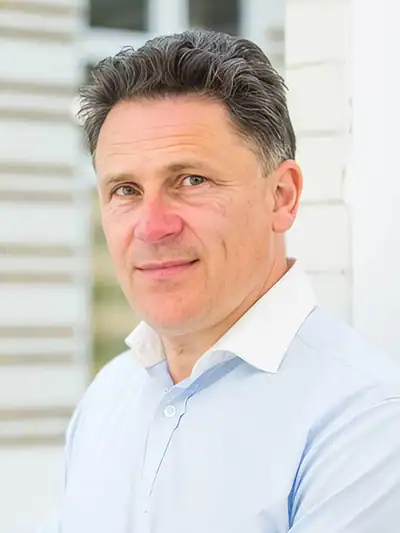
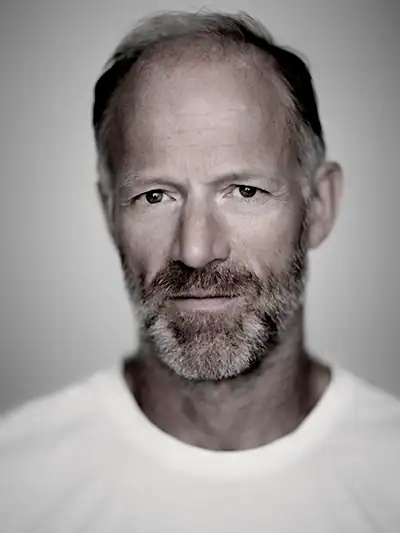
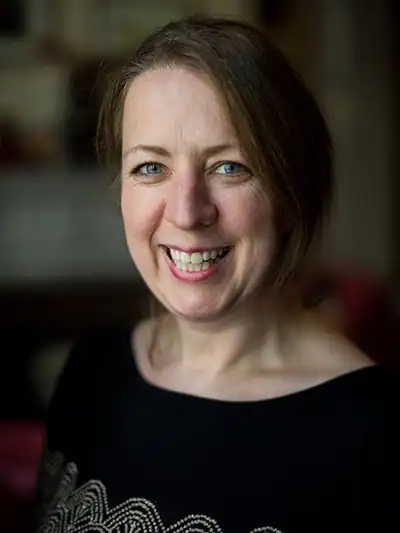


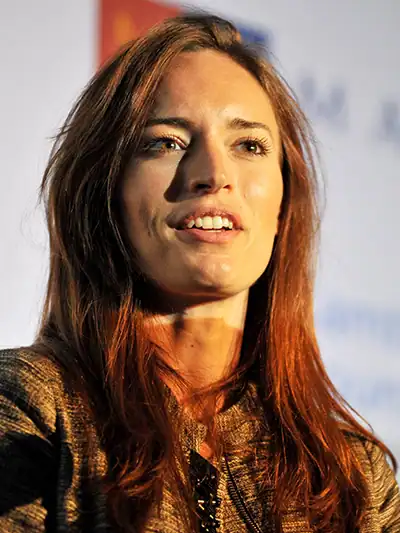

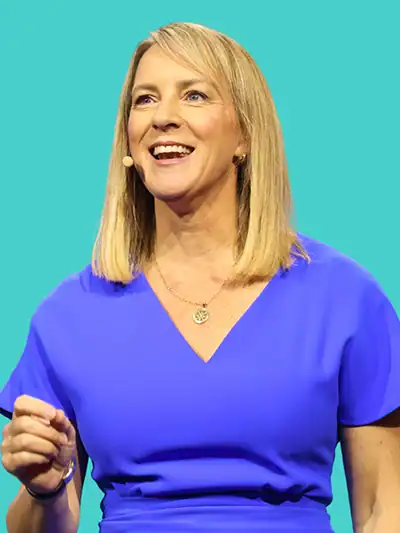

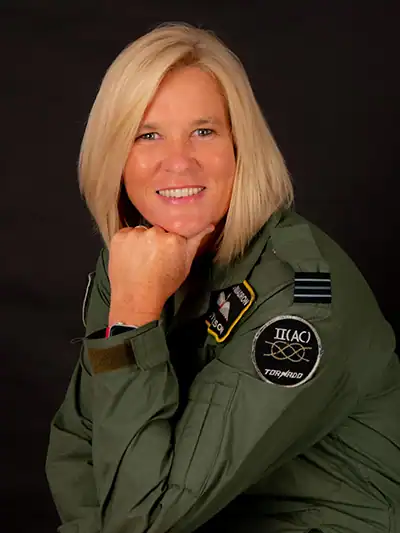


Chris Moon MBE
Chris Moon believes that the responses we default to when we are under severe pressure are the ones we have already rehearsed under ordinary conditions. His story is living proof of exactly this fact.
Chris is a former British Army officer trained at Sandhurst. He has a world-class grounding in leadership, team development, and motivation. After leaving the Army with three years’ operational experience, he was clearing landmines for a charity in Asia and Africa when he was taken prisoner by the Khmer Rouge. Chris negotiated his own release and that of two colleagues.
Two years later, a landmine detonated directly underneath him in a supposedly safe, cleared area of a minefield in Mozambique. Chris lost his right arm and his lower right leg. He survived initially because he treated himself. Fourteen hours after the explosion, he arrived in South Africa, where doctors said they’d never seen anyone live with such a small amount of blood. Chris recovered faster than was expected, left hospital in less than two months, and within a year ran the London Marathon, raising money to help disabled people in the developing world.
He went on to become the first amputee to complete the Marathon des Sables, finished the Badwater 135 in Death Valley, and in 2024, at 62, completed a solo unsupported 500-mile Camino de Santiago. Chris holds a Master’s in Security Management from the University of Leicester and honorary doctorates from Plymouth, Leicester, and Exeter. He has been retained by Microsoft, Ernst & Young, Skanska, Direct Line Group, and London Business School executive programmes; clients who book him not for inspiration but for a reference point on what genuine operational pressure actually does to decision-making. Chris is based in Scotland and is available internationally.
Best for: senior leadership teams in operationally intensive industries (construction, utilities, energy, defence, transport); boards and executive programmes working on leadership in high-pressure conditions; safety, risk, and crisis-leadership briefings where the audience is operational leadership.
Børge Ousland
As Børge Ousland points out, most leadership models are only tested in conditions of managed risk, where failure is recoverable and the environment remains broadly predictable.
But what about the test when conditions strip that predictability away?
The first person to cross Antarctica solo and unsupported, 1,864 miles with no resupply (1996-97); the first to make a solo and unsupported journey to the North Pole (1994); and the first, with Mike Horn, to reach the North Pole during the Arctic winter (2006).
In 2019 the same partnership crossed the Arctic Ocean from Alaska to Norway in continuous winter darkness, an expedition National Geographic called “the boldest polar expedition of modern times”.
The leadership and performance insight Børge brings to his keynotes was built at the source; decision-making with incomplete information, performance over extended periods of pressure, and leadership when the margin for error disappears.
Before exploration, he spent a decade as a saturation diver in the North Sea, then served with Norway’s Marinejegerkommandoen naval special forces. In 2025 the Royal Geographical Society awarded him the Founder’s Medal, approved by King Charles, placing him in the same recognition tier as Sir David Attenborough and Neil Armstrong. He is one of a small number of speakers on the National Geographic Speakers Bureau, featured across five issues of National Geographic Magazine over three decades, and the author of 11 books. Børge is based in Oslo and works internationally.
Best for: boards and senior leadership teams who want a credibility-tier first-hand account of decision-making under sustained, irreversible pressure; programmes on resilience and risk management at the highest level; engagements where the speaker’s institutional standing materially raises the profile of the event.
Libby Jackson OBE
A Flight Director on the International Space Station has minutes, not hours, to make calls that involve crew safety, multinational politics, and millions of pounds of hardware.
As a result, when Libby Jackson talks about the lessons mission control teaches about composure, sequencing, and trust under load, she is talking about the things that senior corporate teams routinely fail to do.
She spent 7 years inside the European Space Agency’s Columbus Control Centre in Munich, including as Columbus Flight Director for the ISS from 2010. She joined the UK Space Agency in 2014, ran the education and outreach programme for Tim Peake’s Principia mission (reaching more than two million students and one in three UK schools), and later became Head of Space Exploration.
In March 2025 Libby took up the new post of Head of Space at the Science Museum in London, the first person to hold that title. She holds an OBE in the 2023 New Year Honours for services to the space sector, the 2023 Leif Erikson Exploration History Award, and is a Fellow of the Royal Aeronautical Society.
Her two books, A Galaxy of Her Own and Space Explorers, are both published by Penguin. She does not offer her space career as inspiration. She uses it as a working case study in how trained teams make decisions when the data is incomplete, the clock is short, and the cost of error is absolute. Libby is based in London and is available internationally.
Best for: senior leadership teams who want a working account of how high-stakes decisions are actually made in mission-critical operations; programmes on composure, trust, and decision-making under load; boards and executive groups that want technical rigour without the jargon.
Mark Beaumont BEM
Mark Beaumont’s premise is that an 80-day cycle around the world may look like a sporting record but is actually closer to a multi-month operational project with a fixed deadline and no option to renegotiate the route.
Holding sixteen hours of cycling a day for eleven weeks, on four hours of broken sleep, is a planning and recovery discipline first.
Mark holds the Guinness World Record for the fastest cycle circumnavigation: 18,000 miles in 78 days and 14 hours, completed in September 2017. He previously rode the length of Africa (Cairo to Cape Town, 10,000 km in 42 days and 8 hours) and set the 2008 record for cycle circumnavigation at 194 days.
The investor side of his work is what distinguishes him from most adventure speakers. He spent six years as a partner at Eos Advisory, the early-stage innovation fund backing Scottish science and technology businesses, and is now an Operating Partner at Envoy Group.
His working week goes on capital allocation, founder assessment, and scale-up risk, which gives him a commercial angle most adventure speakers do not have when they walk into a leadership offsite. He has filmed expeditions for the BBC, Amazon Prime, and GCN for over fifteen years.
Mark was awarded the British Empire Medal in 2018 for services to sport, broadcasting and charity, is the author of five books, including The Man Who Cycled the World and Africa Solo and is based in the UK. Mark is available for engagements internationally.
Best for: senior leadership teams in the long middle of a hard project where the discipline of planning and recovery matters more than the headline; engagements that need an adventure speaker who can also speak credibly to capital allocation, founder dynamics, and scale-up operations; programmes on sustained execution and performance under public scrutiny.
Devon Harris
Devon Harris tells his audiences that resilience is not individual grit but rehearsed behaviour, and that the team formed under maximum public scrutiny is the model worth studying.
He is a three-time Winter Olympian; Calgary 1988, Albertville 1992, Nagano 1998, and a founding member of the Jamaican national bobsled team that became the basis of the film Cool Runnings.
The 1988 team crashed on Olympic ice with the world watching; four years later Devon was back, as captain. Four after that, he was on the ice again.
He is a graduate of the Royal Military Academy, took a Queen’s Commission in 1985, and served as an officer in the Jamaica Defence Force until retiring as a Captain in 1992. That dual formation, British military training layered on a childhood in Kingston’s Olympic Gardens, is the foundation of his perspective on composure under pressure.
The World Olympians Association named him an Olympian for Life at PyeongChang 2018. In 2006 he founded the Keep On Pushing Foundation, a US-registered 501(c)(3) supporting education in disadvantaged communities.
He is the author of Keep On Pushing: Hot Lessons from Cool Runnings. Corporate clients include Adobe, PayPal, Swiss Re, IBM, Emerson, Syngenta, Textron, and West Pharmaceutical Services. Devon is based in the United States and is available internationally.
Best for: leadership and commercial teams who need to keep performing after a visible failure; programmes on team formation under scrutiny and long-cycle execution; engagements where the audience will respond to a globally recognised underdog story with operational substance underneath.
Bonita Norris
The more difficult question after a high-pressure failure is not what went wrong with the plan. It’s what went wrong with the mindset.
Bonita Norris’s went from complete novice to two world records in three years. She is the youngest British woman to summit Everest (2010, age 22), the first British woman to summit Lhotse — the world’s fourth-highest mountain (2012) — and the youngest person ever to reach both the summit of Everest and the North Pole.
The challenges she faced are the same challenge organisations face when asking teams to achieve stretch goals from a standing start. Her framework centres on three named concepts: “Focus Not Fret”, “Mountains of the Mind”, and “Success by Smallness”. These are not metaphors; they are structures that clients including Google, Clifford Chance, BlackRock, Microsoft, Oracle, L’Oréal, Marks & Spencer, and HM Treasury have applied directly.
Her memoir, The Girl Who Climbed Everest, published by Hodder & Stoughton in 2017, reached #1 on Amazon’s mountaineering and adventure chart in 2022. In 2024 she was awarded Best Speaker Storyteller at The Speaker Awards. She has delivered more than 650 corporate engagements worldwide. Bonita is based in London and is available internationally.
Best for: organisations asking teams to deliver stretch goals from a standing start; leadership programmes that need a named, portable framework for managing attention and decision-making under pressure; engagements where the brief calls for a speaker who can move credibly from leadership keynote to data and AI audience.
Alex Staniforth
Alex Staniforth attempted to summit Everest twice. The 2014 season ended in the Khumbu Icefall avalanche that killed 16 Sherpas. His 2015 attempt was halted when the Nepal earthquake trapped him at Camp 1 for two days while three teammates were killed at Base Camp.
Both experiences form the foundation of his work with organisations: that the most useful preparation is not for success, but for what happens when things go wrong.
Since those expeditions, Staniforth has completed a series of documented endurance records; first and fastest to run and cycle all 446 Nuttall mountains in England and Wales in 45 days, fastest to climb all 100 UK county tops in 72 days. He is the author of Icefall and Another Peak, and in 2020 co-founded Mind Over Mountains, a national UK charity combining outdoor experience with professional mental health support.
What separates Alex’s contribution is the public disclosure of depression, anxiety, eating disorders, epilepsy, and a lifelong stammer alongside extreme endurance; a specificity that gives him credibility in mental health conversations most performance speakers cannot access.
His “Resilience Rucksack” framework translates that experience into tools leadership audiences can name and apply. Corporate clients include Rolls-Royce Submarines, Samsung, Accenture, FedEx, Bank of America, Heineken, and the NHS.
Alex was awarded an Honorary Doctorate by the University of Chester in 2025 and the Prime Minister’s Points of Light award in 2023. He is an ICF-trained coach. Alex is based in Cheshire and works internationally.
Best for: organisations where the leadership conversation needs to include mental health credibly, not as an add-on; engagements that need a speaker who can sit between performance content and wellbeing content without losing either audience; programmes that benefit from a regional UK speaker at an accessible fee point.
Debra Searle MVO MBE
Debra Searle spent 111 days alone in a 23-foot plywood boat rowing the Atlantic Ocean. She had not planned to do it solo: but when her husband was rescued 8 days in, she continued, a novice rower with no support vessel, in conditions most professional athletes would not accept.
That experience became the foundation of a practical body of work on resilience and mindset that she has spent two decades translating into organisational tools.
Debra’s Choose Your Attitude Toolkit distils the mental strategies she used at sea into a framework organisations can deploy as repeatable practice, not as inspiration. Her commercial life runs alongside her expeditions rather than separately: she has founded five companies including MIX Diversity Developers, and spent a decade as a Trustee of The Duke of Edinburgh’s Award, the youngest person ever appointed to the board. The Queen recognised her twice, with an MBE in 2002 and an MVO in 2014.
She has delivered over 1,300 keynote addresses across 40 countries, with audience feedback among the most consistent in the field. She has three published books; Rowing It Alone, The Journey: How to Achieve Against the Odds, and The Choose Your Attitude Journal and is based in the UK, available internationally.
Best for: leadership and people teams looking for a credible external voice on attitude and mindset under sustained pressure; engagements where the audience is mixed-seniority and the speaker needs to land with both the board and the floor; programmes that need a framework that workshop facilitators can teach forward.
Paris Norriss
Paris Norriss believes that skilled teams perform well when conditions are manageable, but that is not where most organisations lose ground; the gap reveals itself when pressure is sustained, when targets move, plans fail, and the team has to keep executing without the conditions that made execution feel possible.
He has spent a decade testing that distinction under conditions where the cost of failure was not theoretical. In 2023 he rowed 4,800 kilometres across the Pacific Ocean from California to Hawaii with the Brothers N Oars team over 39 days, navigating two storms, 40-foot waves, and a near-collision with a cargo ship.
In 2025, having previously run only one marathon, he completed the World Marathon Challenge; seven marathons on seven continents in 5 days and 21 hours.
His experiences are not the point. The point is The Grit Code, the framework he built from his extreme experiences and from interviews with more than 50 documented high performers. His earlier career was in investment banking and private equity, with an MA from the University of Edinburgh. He is the founder and executive producer of “Guy in Dubai”, distributed on Amazon Prime, Apple TV, OSN, and Emirates. Past keynote clients include the US Military, Expo 2020, DHL, Nokia, COP28, and Arabian Travel Market. Paris is based in Dubai and works internationally.
Best for: organisations whose teams perform well in good conditions but break down under sustained adversity; engagements where the brief calls for a structured resilience framework with global-audience appeal; programmes that pair the keynote with longer team development work.
Mandy Hickson
Combat aircrew do not have the luxury of a long meeting to weigh options. They have seconds, partial information, an authority gradient between cockpit seats, and a debrief afterwards that is brutally honest about what happened and why.
That operating model is what Mandy Hickson brings to corporate audiences. She joined the RAF in 1994, failed the pilot aptitude tests twice, served as an air traffic controller, qualified as a fast-jet pilot, and went on to fly the Tornado GR4 on No. II(AC) Squadron, completing three operational tours and around 45 missions over Iraq, including patrols of the No Fly Zone.
She was the first woman to do that job on a front-line squadron. After leaving front-line service she trained as a Human Factors facilitator with the UK Civil Aviation Authority, working on Crew Resource Management; authority gradient, threat and error management, fatigue, and decision-making.
That is often the part that matters for business audiences: it allows Mandy to translate cockpit practice into a structured vocabulary which leadership teams can use. She is a Fellow of the Royal Aeronautical Society, an Honorary Fellow of the University of Winchester, Aviation Ambassador for the UK Department for Transport, and a trustee of the RAF Charitable Trust.
Her book An Officer, Not a Gentleman tells the story. Mandy is based in London and is available internationally.
Best for: senior leadership teams and operational leaders who need a working vocabulary for high-consequence decision-making; programmes on debrief, authority gradient, and team performance under time pressure; engagements where the audience is mature enough to value substance over story.
Anna Watkins MBE
Elite performance is the product of mechanics; selection, training load, partnership dynamics, the credible use of data and not the product of the metaphor-heavy stories that many sporting speakers rely on.
Anna Watkins has earned the right to make that case in her keynote speeches. She won Olympic gold in the women’s double sculls with Katherine Grainger at London 2012, setting an Olympic record in the semi-final, after a bronze with the same partner in Beijing 2008.
Four World Championship medals, including gold in 2010 and 2011, and two World Rowing Crew of the Year awards followed.
Her MBE in 2013 was for services to rowing. Her second career is quantitative: a PhD in Applied Mathematics at the University of Reading led into a role at McKinsey as a data scientist and consultant, working with engineering firms and sports teams on analytics strategy.
Anna actually came to rowing late, picking it up recreationally in 2001 as a Natural Sciences undergraduate at Newnham College, Cambridge. The double sculls is a two-person boat where partnership quality determines the outcome, which gave Anna a first-hand perspective on co-leadership, founder pairs, and CEO-CFO partnerships. She is a Founding Patron of the Women’s Sport Trust and a former director of the British Athletes Commission. Anna is based in the UK and is available internationally.
Best for: senior leadership teams looking at high-stakes partnerships, co-leadership models, or the credible use of data in performance decisions; engagements where the audience wants the maths and the medal in the same room; programmes on building elite performance from a non-traditional starting point.
Kit Symons and Holly Sedlacek
Kit Symons and Holly Sedlacek work as a dual-voice partnership: a former Wales international footballer and Premier League manager paired with a chartered organisational psychologist.
Kit Symons spent more than two decades inside professional football, with more than 300 league appearances across Portsmouth, Manchester City, and Fulham, and 36 caps for Wales. He went on to manage Fulham and to coach the Wales national team alongside Chris Coleman.
Holly Sedlacek holds an MA in Industrial and Organisational Psychology, an ICF coaching credential, and certifications in Hogan, EQi 2.0, DiSC, and Transactional Analysis. Before founding Know Your Pace, she spent 14 years in talent and leadership development inside consulting, insurance, and asset management.
Their position is that elite football teams are not built by talent alone but by how a group handles the week after a bad result, the player who loses form, the dressing room conversation no one wants to have. The exact same territory executive teams operate in.
Their format is deliberately two-voice: Kit speaks from the dressing room, Holly translates what happened through psychology a board will recognise. They cover the topics leadership teams quietly struggle with; imposter feelings at executive level, handling failure in public, the emotional cost of transitions, through keynotes, fireside chats, masterclasses, and follow-up team coaching. Both are based in the UK and work internationally.
Best for: leadership teams entering or moving through significant transition where the emotional work is the hard part; engagements that need a single session to cover both lived experience and organisational psychology rigorously; programmes that pair the keynote with longer-form team coaching.
Beyond the keynote
A keynote is the right answer often enough that many organisations default to it, but for self-leadership under pressure it is often not what is actually needed. A senior team that has spent four years navigating sustained pressure will not change behaviour because a speaker gave a good keynote at an executive offsite. What does change behaviour is repeated exposure to a structured method, conversations under skilled facilitation, and the slower work of coaching and consultancy that runs after the event.
Several of the people in this guide are also coaches, consultants, programme directors, and faculty members who deliver keynotes when asked but, if the need is for something longer, the section below lists who, in this cohort, can deliver more than keynotes. I’ve covered a variety of formats; workshops, programmes, executive coaching, and consultancy or advisory work.
Workshops and masterclasses
The most common ask after a keynote is the half- or full-day session with the same senior group, going deeper into the framework the keynote introduced. The speakers in this guide who publish workshops and masterclasses as a service include the following.
Anna Hemmings runs workshops and masterclasses through Beyond the Barriers, framed around her three pillars of inspiring leadership, high-performing teams, and resilience.
Sir Clive Woodward delivers workshops alongside executive coaching and digital learning, anchored on the Teamship method documented in Winning! and How to Win.
Steven D’Souza delivers workshops on each of his four books, Not Knowing, Not Doing, Not Being, and Shadows at Work, and has delivered them at the United Nations ILO, Eurostar, and Credit Suisse.
Jennifer Willey offers a substantial set of named workshops, including Confident Communications, Business Storytelling, Present Like a Pro, Listen to Win, Bold Moves, and Negotiations.
Penny Mallory delivers workshops and masterclasses paired with the MTQPlus psychometric assessment, which moves the engagement beyond storytelling into measurable diagnostic work.
Dean Leak runs workshops as part of his work with senior teams, in-person or virtual, built around the Disagree Well framework.
Shil Shanghavi delivers workshops on communication as a measurable discipline, working with the SpeakerLab analytics platform.
Chris Moon runs named workshops on Personal Leadership, Leadership for Leaders, Communication and Negotiation, Winning in Adversity, and Sales Performance.
Mark Beaumont runs leadership development workshops alongside his speaking and advisory work.
Alex Staniforth delivers immersive workshops in partnership with The Audax Generation, blending storytelling with coaching games and applied frameworks.
Debra Searle offers workshops from one hour to two days in length, including specialist sessions for People Managers and Executive Leadership Meetings.
Mandy Hickson delivers facilitated training sessions on human factors and crew resource management, translating cockpit practice into a working vocabulary for boards and operational leaders.
Holly Sedlacek and Kit Symons run a wide catalogue of workshops through Know Your Pace, including Assertiveness and Finding Your Voice, Confident Communications, Psychological Safety, Managing Anxiety, and Building Resiliency.
Programmes
A programme is great when the work required is too substantial for a workshop and the change has to outlast the conclusion of the engagement. The speakers in this guide who design and deliver multi-session leadership development programmes include:
Anna Hemmings designs bespoke corporate programmes built around the culture and needs of the client organisation.
Zana Goic Petricevic runs the Game Changers Academy, a seven-month leadership programme, alongside her named programmes Her Boldest Self, On the Edge, Becoming Bold, and Bold Leaders, all delivered through her consultancy Bold Leadership Culture.
Jamil Qureshi has developed and delivered board-level leadership programmes for Coca-Cola, Hewlett Packard, Emirates Airlines, Serco, O2, and Cisco.
Pete Cohen runs HR-led training and development programmes specifically designed to reduce reactive behaviour and strengthen accountability conversations inside organisations under pressure.
Jennifer Willey runs the Fearless Leadership Accelerator (a multi-workshop programme) and the Fearless Sales: Pitch to Win Training and Coaching Program.
Penny Mallory delivers a three-month Mental Toughness Coaching Programme.
Shil Shanghavi runs 12-month coaching programmes for senior executives, limited to ten clients per year, each one fully customised and underpinned by the SpeakerLab AI platform.
Debra Searle runs The Debra Searle Academy, an online programme library covering Results Accelerator, Bold+Balanced, and Confident Public Speaking, available for corporate LMS upload.
Holly Sedlacek and Kit Symons run Rise to Your Potential, a six-module 1:1 programme available in three- and six-month formats through Know Your Pace.
Executive coaching
For one-to-one work with a CEO, executive committee member, or senior leader, the speakers in this guide who offer coaching as a service include:
Joy Poole offers leadership and career coaching through her practice, targeted at senior women in technology, financial services, and consulting.
Anna Hemmings delivers 1-to-1 leadership coaching for CEOs, MDs, C-suite, and senior leaders, typically in blocks of six two-hour sessions.
Steven D’Souza offers executive coaching alongside team coaching, framed around breakthrough transformation in complex environments.
Sir Clive Woodward delivers executive coaching as part of his corporate services portfolio.
Zana Goic Petricevic delivers executive coaching for mid- to top-level leaders, holding CPCC, ORSCC, ICF-PCC, and Leadership Circle® credentials.
Ruth Gotian offers executive coaching by application only, selecting a limited number of mid- and senior-level professionals each year, with an intake interview and assessment process before any engagement.
Jamil Qureshi operates as a performance coach to senior business and elite-sport clients.
Diana Renner offers coaching grounded in her work on how leaders develop capacity when certainty is no longer available.
Pete Cohen delivers STOP 2 THINK™ Executive Coaching, specifically built for leadership behaviour under sustained pressure.
Jennifer Willey offers Transformative Coaching Sessions and Communications Coaching at the 1-on-1 level.
Penny Mallory delivers Mental Toughness Executive coaching, accredited at EMCC European Quality Award Expert Coach of Excellence level.
Chris Moon coaches and mentors a wide variety of executives alongside his speaking and workshop work.
Shil Shanghavi runs 1:1 coaching programmes for senior executives on public speaking and communication, with the SpeakerLab analytics platform as the diagnostic foundation.
Alex Staniforth offers 1:1 online coaching for leaders, adventurers, and introverts, with an initial chemistry call available before commitment.
Holly Sedlacek and Kit Symons offer individual coaching, team coaching, and career coaching through Know Your Pace, with ICF accreditation and Hogan, DiSC, and EQi 2.0 certifications.
Consultancy and advisory work
The longest-form engagement is one where the speaker is working with your organisation rather than appearing for your organisation. The speakers in this guide who deliver consultancy or advisory work as a service include:
Sir Clive Woodward runs corporate consultancy services across various businesses, supporting teams and organisations on the application of his Teamship method outside elite sport.
Zana Goic Petricevic runs Bold Leadership Culture, a boutique leadership development consultancy, alongside her programme and coaching work.
Diana Renner offers consulting work focused on helping organisations build the capacity to adapt by strengthening their ability to learn, reflect, and respond in real time, rather than by adding more frameworks.
Pete Cohen runs Project Consulting through Mi365, with strategic advisory engagements for organisations managing AI integration and workforce adaptation, major transformation, cultural reset, and performance instability.
Jennifer Willey lists consulting as one of three core services through Wet Cement, alongside training and coaching.
Dean Leak is regularly engaged for advisory work alongside his keynote and offsite engagements, including work with senior government advisors.
Mark Beaumont offers advisory work as one of four named pillars of his commercial practice.
Debra Searle has founded five companies and holds board-level governance roles, including the diversity and inclusion consultancy Mix Diversity, which she co-founded.
This section exists because self-leadership under pressure is a challenge where the right intervention, more often than not, has to go beyond the typical keynote.
Frequently asked questions
What is the difference between a resilience speaker and a self-leadership speaker?
A resilience speaker typically helps audiences recover from a setback or shock: a defined event with a beginning, a middle, and an end. A self-leadership speaker, on the other hand, works on the leader’s internal operating system: how they think, decide, and show up when the pressure is continuous and shows no sign of ending. For a senior leadership team under sustained pressure rather than a single defined crisis, consider carefully which type of speaker is most appropriate.
Who is the best speaker for self-leadership under pressure?
There is no such thing. The right choice depends on the audience, the format, and what the team is being asked to do differently afterwards. For senior teams that need an intellectual framework for operating under ambiguity, Steven D’Souza, Diana Renner, and Zana Goic Petricevic are strong fits. For audiences that need an operational reference point, Sir Clive Woodward, Chris Moon, Sarah Furness, and Børge Ousland are among the most credible voices on the circuit today. For a long-form engagement that goes beyond the keynote, the speakers in the Beyond the Keynote section of this guide provide workshops, programmes, coaching, and consultancy.
What is the fee range for a self-leadership keynote speaker?
For a keynote, fees in this category typically sit between £8,000 and £40,000 plus expenses, with most established speakers in the £15,000 to £25,000 band. Fees rise for headline names with substantial credentials, and fall for newer voices and regional speakers. Workshops, executive coaching, and programme work are priced separately and vary by scope.
How long before our event should we book a self-leadership speaker?
When it comes to booking any speaker, longer lead-times to event are always better. That said, for a single keynote, 4 to 8 weeks is usually workable for most of the speakers in this guide, although the most in-demand voices can be booked 6 to 9 months ahead for popular dates. For a workshop, programme, or coaching engagement, 12 to 16 weeks is more realistic, because design and customisation happen alongside calendar coordination. For board-level consultancy work, allow at least one full quarter to scope properly.
What is “the internal operating system of leadership”?
It is the way a leader’s mind functions under sustained pressure: the quality of their decisions, the steadiness of their judgment, their ability to remain present with their team, and their capacity to recognise the patterns; false certainty, premature closure, motion-as-progress, that degrade leadership when conditions get harder. The phrase comes from Joy Poole’s work and I chose it for the editorial frame for this guide.
What is the difference between self-leadership and executive coaching?
Self-leadership is the content. Executive coaching is one of the formats in which that content is delivered. A keynote on self-leadership reaches an entire audience in an hour; a coaching engagement works one-to-one with a senior leader over weeks or months. Many of the speakers in this guide do both, and the right mix depends on whether the work is for a leadership team or for an individual leader.
Can we book a self-leadership speaker for a workshop or programme rather than a keynote?
Yes, and for sustained-pressure leadership challenges, longer formats can often deliver more measurable change than a single keynote. The speakers in the Beyond the Keynote section of this guide explicitly offer workshops, multi-month programmes, executive coaching, and consultancy work alongside their speaking. We can advise on the right format and pairing for a given brief.
How do I write a good brief for a self-leadership speaker?
Take the time to answer these four questions well. They always lead to a better match than a long generic brief:
a) What pressure is the audience actually carrying?
b) What do you want the audience to do differently the week after the event?
c) What kind of speaker has worked for this audience before, and what hasn’t?
d) Is there a tonal constraint? For example, can the audience handle cynicism, vulnerability, or celebration, etc?
Add your answers to your brief when contacting us.