
- A Buyer's Guide to 42 of the World's Leading AI Voices
- Section 1: AI strategy and the board agenda
- Section 2: AI ethics, governance and responsible technology
- Section 3: AI adoption, workforce, and the human side of transformation
- Section 4: The future of AI and emerging technology
- Section 5: AI for marketing, CX, and commercial functions
- How to brief us once you’ve shortlisted
- Frequently asked questions about booking an AI keynote speaker
- Related topic hubs
A Buyer’s Guide to 42 of the World’s Leading AI Voices
In 2024 and 2025, “AI” became the most-requested topic on event briefs across almost every sector we work with, from FTSE 100 boards to L&D directors building twelve-month learning plans. The category has matured fast. The speakers who were credible in 2022, when generative AI was a novelty, are not always the right choice for an audience that has now run pilots, hired AI leads, and started to ask harder questions about return on investment, governance, and what the technology actually means for the way work gets done.
This guide is built for the people who do the booking: heads of events, internal communications leads, conference programme managers, executive assistants briefing the board, and L&D teams designing leadership programmes. It is not a ranked “best of” list. It is a practical filter for matching the right voice to the audience, the brief, and the budget.
We have grouped 42 of our most-booked AI keynote speakers by the type of programme they are best suited to. Most of them sit inside a $5,000 to $50,000 fee band, with one or two outliers when an organisation wants a headline name. They are all currently bookable, all actively speaking in 2026, and all sit somewhere on the spectrum from board-level strategy to floor-level adoption.
Before we get to the speaker list, here are four practical points worth considering.
1. Start with the decision, not the topic
“We want a speaker on AI” is never specific enough. AI as a subject now spans at least five very different broad areas:
- AI strategy and the board agenda: where AI investment sits in the long-range plan, what returns are realistic, and how to govern it
- AI ethics and responsible deployment: accountability, regulation, fairness, risk
- AI adoption and the workforce: how non-technical employees actually use these tools, change fatigue, upskilling
- The future of AI and emerging technology: what is coming next, how to plan against accelerating change, the macro picture
- AI in marketing, CX, and commercial functions: practical applications inside customer-facing teams
A speaker who is brilliant in one area is often the wrong choice for another.
“Who is the best AI speaker?” is not the right place to start. The best place to begin your search is “what decision do we want the audience to walk away ready to make, or feel differently about?”
2. Match the speaker to the audience, not your own preferences
We have seen many occasions where a senior internal sponsor names a speaker they admire. Usually from a podcast, a book they read, or a TED talk someone forwarded to them. But the event and the audience is not the right audience for that speaker. It’s not who they address and the event falls flat.
Boards and audit committees want frameworks that help them make decisions and named cases; they do not want inspiration. People teams and L&D programmes want a speaker who can help reduce anxiety and build practical confidence; they do not need a sector-specific futurist. Sales kickoffs and customer conferences want energy, accessible language, and a clear “so what.” Different speakers work best with different audiences.
3. The fee band is a useful guide
For an AI keynote speaker working actively in 2026, fee bands roughly map to:
- $5,000 to $10,000 emerging voices, regional specialists, strong signature talks on a defined niche, often with growing media profiles
- $10,000 to $25,000 established speakers with a published book or specific operating credential (ex-Big Tech, former public office, recognised academic position), the band where most corporate keynote work happens
- $25,000 to $50,000 recognised names with a research base, a global track record, and audience demand that allows them to be selective
- $50,000+ is what I call the “headline” tier, which includes former Google/OpenAI executives, government leaders, and bestselling authors with mass-market recognition; usually booked for flagship events where the speaker is the headline
A higher fee does not always buy a better fit. Some of the most-booked speakers in our roster are in the $10,000 to $25,000 band because their material is exceptionally well-suited to the audiences they are booked for. The right question should not be “what is the most we can afford?”, rather it should be “who does the audience need to hear from?”
4. What to watch out for
Here are the three problem areas we see most often:
- The 2024 talk in 2026. Speakers who built their material around “what is generative AI?” two years ago and have not updated it. The audience has moved on. Always ask to see a recent talk video from the past six months.
- The technologist who doesn’t gel with a non-technical audience. Some genuine experts have not built an audience translation skill. One clue is their material is jargon-heavy and highly academic.
- The futurist with no operator credibility. Confident predictions, but light on lived experience. For boards and audit committees, this does not come across as insight. Look for operating credentials in the speaker’s background: ex-CIO, former Chief Data Officer, regulator, academic with published primary research.
The rest of this guide groups 42 of our most active AI speakers by the kind of event / audience they are best for. Profiles cover the speaker’s positioning, what kind of audience they are built for, and the angle they bring. To check fees and availability for any speaker, use the link on their profile or contact us directly.
Section 1: AI strategy and the board agenda
Speakers in this section work with executive committees, boards, and C-suite audiences making capital allocation and strategy decisions about AI. The brief is usually: “help us think clearly about what we are committing to.”



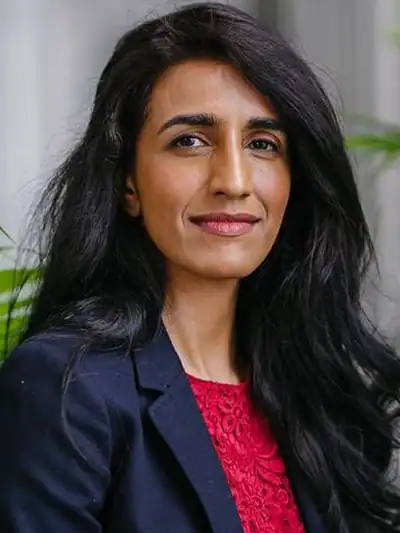


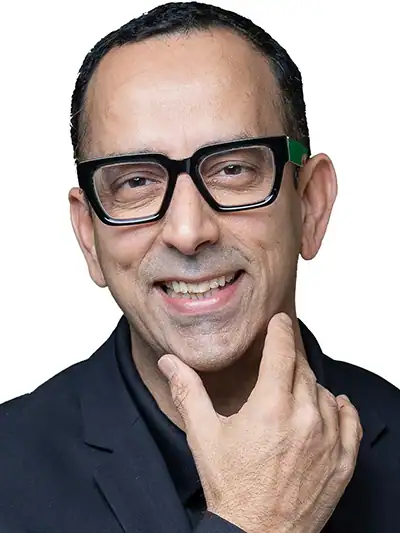
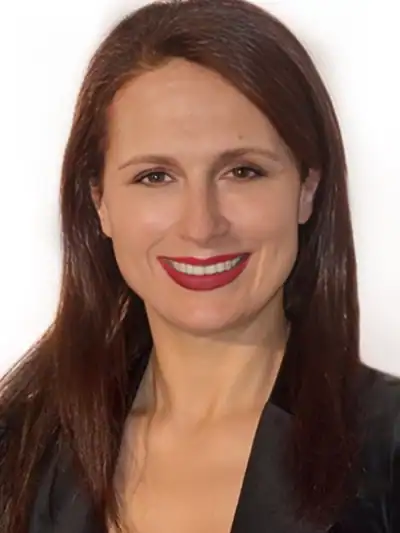
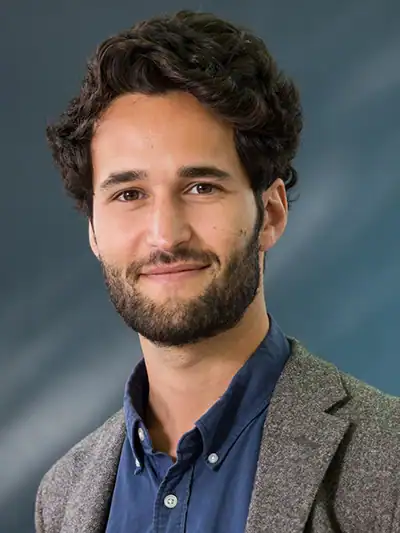
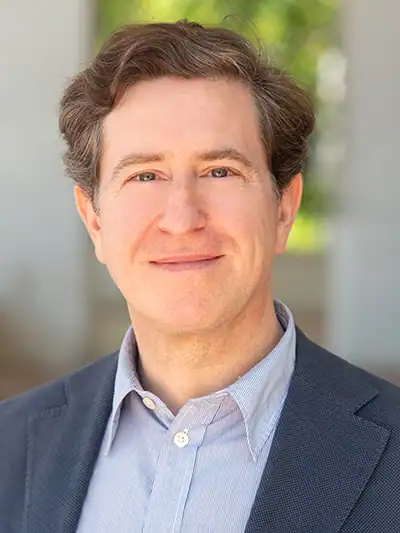
Miriam Meckel
Co-founder and CEO of ada Learning, the AI and transformation academy spun out of Handelsblatt Media Group, Miriam Meckel is the speaker we recommend most often when a European board is moving from “we have an AI strategy” to “we are operationally deploying AI.”
Professor of Communication Management at the University of St. Gallen, co-author of Alles überall auf einmal (Rowohlt, 2024) on AI, and Faculty Associate at Harvard’s Berkman Klein Center, Miriam works where AI is today, covering what European regulation now requires, and what it does to leadership over a three-to-five-year horizon.
Her talks give boards a working mental model of where generative AI is operational, where it is still pilot, and where it remains speculative. Crucially, she provides sharper questions to ask vendors and internal AI teams and also bridges the current deployment conversation to the next horizon, including brain-computer interfaces and quantum computing for executive audiences who want to think two cycles ahead.
Best for boards and executive committees confronting AI seriously rather than in passing, CHROs redesigning workforce capability, and CEOs in regulated European industries balancing AI ambition with the EU AI Act. Recipient of the Rudolf-Diesel-Medaille (2025) and former editor-in-chief of WirtschaftsWoche.
Sol Rashidi
Sol Rashidi is a four-time Fortune 100 C-suite executive at Estée Lauder, Merck, Sony Music, and Royal Caribbean. She is currently Chief Strategy Officer for Data and AI at Cyera, author of Your AI Survival Guide (Wiley, 2024), and a Senior Fellow at Harvard Kennedy School’s Mossavar-Rahmani Center for Business and Government. Sol is one of the few AI speakers whose credibility rests on having actually run enterprise AI deployment at scale; not as a consultant, but as the executive answerable for it.
Her keynotes give boards a working mental model for AI governance and security at board level, a direct understanding on what the workforce conversation looks like once AI is introduced to operations, and specific deployment lessons drawn from named Fortune 100 environments. She holds 10 patents in data and AI and has been named to Forbes’ “AI Mavericks of the 21st Century.”
Best for boards and executive committees deciding how to own AI strategy and risk, CDOs and Chief AI Officers moving from pilots to enterprise deployment, and any leadership team confident enough to want a speaker who will tell them what they got wrong as well as what to do next.
Michael Wade
Professor of Strategy and Digital at IMD Business School in Lausanne and Director of IMD’s TONOMUS Global Center for Digital and AI Transformation, Michael Wade brings a research-backed perspective thoroughly grounded in primary data: the centre publishes the annual AI Maturity Index of the largest companies in the Forbes Global 2000.
Co-author of Digital Vortex (winner of the 2017 Axiom Business Book Award), Orchestrating Transformation, Hacking Digital and GAIN: Demystifying GenAI, Michael is the speaker we recommend when a leadership team is mid-transformation and needs to course-correct rather than start.
His talks give boards:
- specific and clear understanding on where their organisation is on the AI maturity dimensions,
- what separates companies running AI in production from those still in pilot,
- working language for the gap between digital ambition and execution, and
- a way to frame AI investment as an organisational change problem with the operating model and leadership decisions as the binding constraint.
Best for boards and executive committees overseeing digital and AI strategy, Chief Digital Officers and Chief AI Officers responsible for end-to-end transformation, and CEOs making capital allocation decisions on AI and technology.
Ayesha Khanna
Co-founder and CEO of Addo AI, a global AI solutions firm whose clients include Singtel, SMRT, Pfizer, Sompo Holdings, Habib Bank and Smart Dubai, Ayesha Khanna is one of the most operationally focused AI speakers in our roster. She is also a serving board director at Johnson Controls (NYSE: JCI), NEOM Tonomus, and, previously, AVEVA.
A member of the World Economic Forum Global Future Councils with a PhD in Information Systems from the London School of Economics, Ayesha brings a rare combination of an enterprise AI deployment operator, a non-executive director, and a published academic.
Her keynotes give CEOs:
- a diagnostic for why AI pilots stall before scaling,
- a framework for building the business-outcome architecture needed to move from experimentation to production, plus
- a practical understanding of what AI governance should look like at board level; what they need to own, what to delegate, and what risks require a formal framework.
Ayesha is also co-author of Hybrid Reality (TED Books, 2012) with a forthcoming book Gamechanger on generative AI business strategy, and named to the Edelman Top 50 AI Creators (2025).
Best for CEOs and C-suite teams building or scaling enterprise AI programmes, board directors responsible for technology governance, and financial services, healthcare, and infrastructure organisations at advanced stages of AI deployment.
Cassie Kozyrkov
Cassie Kozyrkov was Google’s first Chief Decision Scientist (2018-2023), where she personally trained more than 20,000 Googlers in data-driven decision-making and AI, and guided over 500 decision intelligence projects inside Google.
Now founder and CEO of Kozyr, an AI advisory and education business, she is one of the most-followed AI educators of senior leaders worldwide; a LinkedIn Top Voice for six consecutive years, with writing in Harvard Business Review, Fortune, Fast Company, WIRED and The Wall Street Journal.
Her talks are unusually effective at bridging the gap for audiences made up of technical and non-technical people. She gives leaders:
- a working definition of Decision Intelligence and where it sits relative to data science, analytics and AI investment,
- a sharper diagnostic for why AI projects stall (wrong decision scoped, wrong owner, wrong question),
- shared language for debating AI initiatives without defaulting to buzzwords, and
- a realistic read on what current AI systems can and cannot be trusted to decide without human judgement.
Best for CEOs and boards setting AI strategy and capital allocation, Chief Data, Analytics, and AI Officers building decision-intelligence operating models, and leadership programmes that need genuine AI literacy rather than a vendor pitch.
Julie Holmes
Author of Little Big Bangs for Leaders, Julie Holmes is a Hall of Fame Speaker (PSA-UKI – one of only 33 to hold the honour) whose client list includes Oracle, Expedia, American Express, JetBlue, Nestle, EY, VMware, US Bank and LinkedIn.
Founder of two innovation companies with products distributed in over 60 countries, she is the speaker we recommend when a leadership team has run AI pilots but does not yet have a working framework for turning AI from a source of efficiency into a source of lasting advantage.
Julie’s talks deliver:
- the Second Story Strategy, her framework for building durable competitive advantage on top of AI through four levels (build, reimagine, extend, and lead) rather than using AI only to keep pace,
- a clearer view of what an AI strategy playbook contains and how to draft one,
- concrete examples of where AI changes sales and customer experience with named tools,
- language for talking to non-technical employees about AI capability without inducing fear, and
- a sharper sense of which AI use cases are worth piloting and which are noise.
She is also guest lecturer at Yale, Birkbeck (University of London), and the American University of Beirut.
Best for CEOs, COOs and CTOs setting an enterprise AI direction, heads of transformation responsible for AI deployment, and sales and customer-experience leaders integrating AI into commercial workflows.
Ian Khan
Ian Khan is a USA Today bestselling author of Undisrupted, which introduces the Future Readiness Score across seven organisational pillars, and author of Metaverse For Dummies (Wiley). Executive producer and host of The Futurist, a streaming series on Amazon Prime Video across more than 45 regions, and a Thinkers50 Future Readiness Award finalist, he is regularly featured by CNN and Forbes.
His talks are based on hundreds of documented executive interviews rather than abstract predictions. This empirical base behind the material is what makes him distinctive among futurist speakers . Audiences come away with:
- a shared vocabulary for assessing where the organisation actually stands on AI and digital readiness,
- a prioritised view of which technology bets are worth compounding and which to retire,
- sharper criteria for AI governance decisions from data to adoption, and
- concrete patterns from real organisations.
Best for CEOs, CIOs and CTOs sponsoring AI strategy across business units, boards and executive committees setting technology investment priorities, transformation and digital leaders responsible for moving pilots into production, and government and public-sector leaders assessing AI readiness and governance.
Maria Santacaterina
Author of Adaptive Resilience: How to Thrive in a Digital Era (Wiley, 2023) and a ForHumanity Fellow contributing to AI audit and governance standards, Maria Santacaterina is founder and CEO of a UK board advisory firm focused on strategic leadership and digital transformation.
Named in Computer Weekly’s Most Influential Women in UK Tech longlist, she works specifically in AI strategy, board oversight, and ethics; a tighter remit than most AI speakers operate within.
Her keynotes give boards:
- a board-level vocabulary for governing AI decisions that stand up to regulatory and stakeholder scrutiny,
- a clearer view of where human judgement remains the binding constraint on AI deployment and where it does not,
- specific reference points from Adaptive Resilience for stress-testing the organisation’s digital strategy, and
- a grounded sense of how European AI regulation and ethics standards translate into operating choices.
Best for boards and audit committees commissioning AI governance and assurance, CEOs and CTOs moving AI from pilot to operational deployment, and risk, ethics and compliance leaders building defensible AI policy.
Daniel Susskind
Mercers’ School Memorial Professor of Business at Gresham College, Research Professor in Economics at King’s College London, Senior Research Associate at Oxford’s Institute for Ethics in AI, and Digital Fellow at Stanford’s Digital Economy Lab. Daniel Susskind is one of the most cited contemporary voices on AI, work, and the economy.
Co-author of The Future of the Professions (2015), which argued that AI would unbundle expert work in law, medicine, accounting and consulting into tasks absorbed by machines, paraprofessionals and software.
Daniel is also author of A World Without Work (2020) and Growth: A Reckoning (2024), both of which were Financial Times Business Book of the Year runner-ups. Furthermore, Barack Obama named Growth as one of his favourite books of the year.
Daniel is a member of the UK Government Expert Panel on AI and the Future of Work, and previously a policy adviser in the Prime Minister’s Strategy Unit, the 10 Downing Street Policy Unit, and the Cabinet Office; Kennedy Scholar at Harvard.
His talks give boards and C-suite teams:
- a grounded economic view of how AI changes work (distinct from the consultancy version),
- sharper questions to put to the firm’s own workforce and productivity assumptions,
- a working frame for distinguishing AI hype from the shifts that will actually hit the P&L, and
- a clearer position on what growth means for the business when the inherited growth model is breaking.
Best for boards and executive committees of professional services firms grappling with AI’s impact on the expert business model, CHROs planning multi-year workforce design around AI, CEOs, CFOs and chief strategy officers debating growth and capital allocation, and government, regulator and public-sector leadership audiences working on AI and labour-market policy.
Roger Spitz
President of Techistential and Chair of the Disruptive Futures Institute in San Francisco, Roger Spitz brings the credibility of an operator who has also done the strategic-foresight academic work.
Former Global Head of Technology M&A at BNP Paribas, where he led 50-plus transactions with a combined value exceeding $25 billion, he is now the author of Disrupt With Impact and the four-volume Definitive Guide to Thriving on Disruption, winner of the 2024 Chanticleer International Book Awards first place in Business and Enterprise Non-Fiction.
A WEF Global Foresight Network member and Thinkers360 Top 10 for Management Leadership, his keynotes are designed for boards and executive committees revisiting strategic planning assumptions under accelerating disruption. Audiences come away with:
- a clearer view of why linear forecasting is failing and what replaces it,
- a working grasp of his AAA Framework (antifragility, anticipation, agility) and how to apply it to their own strategy cycle,
- specific framing for human-AI decision-making drawn from his work on “techistentialism,” and
- case material from M&A, frontier technology and foresight consulting.
Best for chief strategy officers, chief AI officers and heads of corporate development, institutional investors and private equity leadership teams, and policy leaders and central banks running foresight and resilience briefs.
Section 2: AI ethics, governance and responsible technology
Speakers in this section cater for audiences working within AI and accountability: boards facing audit and regulatory questions, risk committees, ethics committees, regulated-industry leadership, and any organisation where AI deployment carries reputational or compliance stakes.




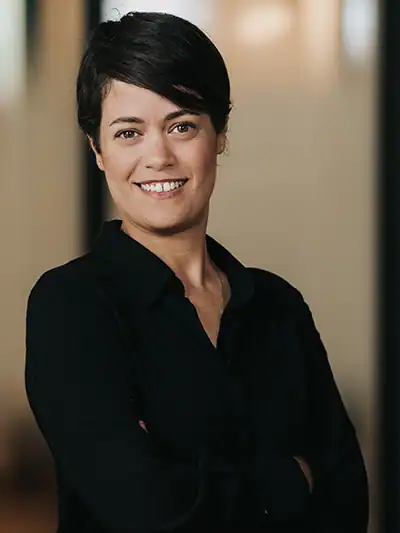

Sandra Wachter
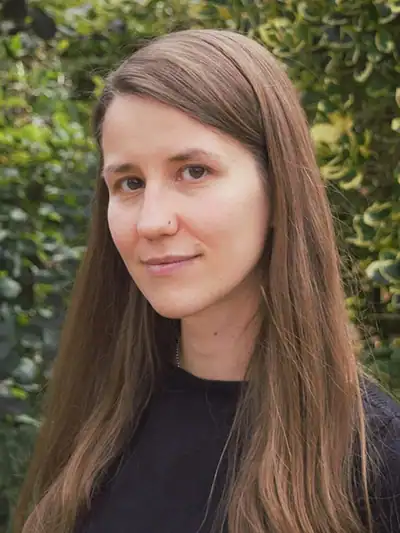
Professor of Technology and Regulation at the Oxford Internet Institute, University of Oxford, and Humboldt Professor at the Hasso Plattner Institute, Sandra Wachter leads Oxford’s Governance of Emerging Technologies (GET) Research Programme.
Sandra’s work lies firmly in the territory of legal standards and technical verification. The tools her research has produced are in use at scale: the Counterfactual Explanations framework she co-developed is deployed in production by Google, IBM, Microsoft, Accenture and Vodafone, and her Conditional Demographic Disparity (CDD) bias test.
The last was built after demonstrating that 13 of 20 commonly used bias tools fail EU non-discrimination law, and was adopted by Amazon and IBM in their cloud services.
In 2024, it was also used to expose systemic bias in the Dutch national education system; the Dutch Minister of Education apologised and initiated formal reform. The NHS and MHRA have revised medical device licensing practices using her findings.
Published in Science Robotics, Nature Electronics and Nature Reviews Physics, with over 20,000 Google Scholar citations. Awards include the Alexander von Humboldt Foundation Research Award (2025, €3.5M) and the CognitionX AI Ethics Award (2017, 2023); previously Visiting Professor at Harvard Law School.
Sandra’s talks give boards:
- a clear-eyed assessment of where current AI governance practices fall short of EU and UK legal standards,
- practical grounding in legally defensible tools for explainability and bias measurement,
- informed foresight into how the EU AI Act and emerging AI liability frameworks will affect deployment requirements, and
- an understanding of how generative AI creates specific new liabilities around hallucination and misinformation.
Best for boards and C-suite teams making AI adoption and governance commitments, Chief Data Officers designing accountability frameworks, legal, compliance and risk leaders responsible for AI deployment decisions, and public sector and regulatory audiences shaping AI policy.
Luciano Floridi
Founding Director of Yale University’s Digital Ethics Center and John K. Castle Professor in the Practice of Cognitive Science, Luciano Floridi is one of the most consequential living voices on AI ethics.
He is the chair of the AI4People Scientific Committee whose ethical framework the European Commission’s High-Level Expert Group on AI formally adopted in 2019, and which became the intellectual foundation of the EU AI Act, the world’s first major AI regulation.
Formerly OII Professor of Philosophy and Ethics of Information at the University of Oxford and Director of the Oxford Internet Institute’s Digital Ethics Lab, his 2014 book The Fourth Revolution (Oxford University Press) introduced the “infosphere” and “onlife” frameworks, arguing that digital technologies constitute a fourth revolution in human self-understanding comparable in scale to those of Copernicus, Darwin and Freud.
Luciano’s more recent work positions AI as a new form of agency rather than a new form of intelligence. This is an important distinction: because AI can take actions and influence outcomes, organisations need to be very clear about who is accountable for those actions and how humans supervise, limit, audit, and correct them.
He is the author of more than 300 works including The Ethics of Artificial Intelligence (OUP, 2023); Editor-in-Chief of Philosophy & Technology (Springer Nature) since 2010; his advisory work spans the European Commission, the German Ethics Council, the UK Cabinet Office, and Google, IBM and Microsoft. He is also recipient of the Knight of the Grand Cross of the Order of Merit of the Italian Republic (2022) – Italy’s highest national honour – alongside the IBM Thinker Award and the Barwise Prize from the American Philosophical Association.
Luciano’s talks give boards and C-suite teams:
- a working framework for why existing AI governance policies often fail to address accountability,
- familiarity with the infosphere and onlife concepts and their application to organisational decision-making,
- a clear account of the “agency without intelligence” argument and what it means for assigning responsibility, and
- practical orientation on the EU AI Act’s intellectual foundations and what genuine compliance requires beyond procedural checkboxes.
Best for boards and C-suite leadership teams making decisions about AI deployment and governance risk, Chief Digital, Technology and Risk Officers navigating AI regulation, regulatory, legal and compliance functions operating under the EU AI Act, and government bodies and public sector organisations designing AI oversight structures.
Stephanie Hare
Author of Technology Is Not Neutral: A Short Guide to Technology Ethics (London Publishing Partnership, FT Best Technology Books of summer 2022), Stephanie Hare is one of the most credentialed voices on technology ethics actively speaking today.
A PhD and MSc from the London School of Economics, BA from the University of Illinois at Urbana-Champaign, with study at the Sorbonne, Stephanie is an Alistair Horne Visiting Fellow at St Antony’s College, Oxford.
A former Principal Director at Accenture Research, strategist at Palantir, and senior Western Europe analyst at Oxford Analytica, her credibility rests on having done the operating work in addition to the writing.
Co-presenter of Artificial Intelligence: Decoded on BBC television, Stephanie’s talks give boards:
- a working framework for making and defending technology-ethics decisions,
- a clearer view of where AI regulation and political risk are moving and how that should shape operating choices, and
- cross-sector case examples drawn from her consulting work with KPMG, IKEA, LEGO, BAE Systems and the Alan Turing Institute.
Best for boards, chief AI officers and CTOs making defensible decisions on AI, biometrics and data, general counsel, chief risk officers and compliance leaders facing AI regulation, technology and advisory firms looking for a senior externally credible voice, and scientific institutions running complex technology-ethics briefs.
Toju Duke
Toju Duke spent 10 years at Google, with her final three years as Responsible AI Programme Manager working across product and research teams on large-scale models; exactly the experience boards need when commissioning their own Responsible AI programmes.
Author of Building Responsible AI Algorithms (Apress, 2023), a structured framework for fairness, transparency, safety, privacy and robustness across the machine learning lifecycle, and co-author with Prof Paolo Giudici of Responsible AI in Practice (Apress/Springer Nature), she is now founder and CEO of Diverse AI, a community interest organisation with a mission to support and champion underrepresented groups to build a diverse and inclusive AI future while building new diverse datasets through research practices.
A media contributor including BBC One Sunday Morning Live, Sky News, Al Jazeera, CGTN America, El Pais, La Vanguardia and Sifted, Toju’s keynotes give audiences:
- a working vocabulary for Responsible AI grounded in a published framework rather than vendor marketing,
- a view of where AI risk actually sits in the machine learning lifecycle from problem definition through deployment, and
- a reference model for translating AI principles into review processes, documentation and accountability structures.
Best for boards and executive committees commissioning or governing AI programmes, chief AI officers and chief data officers building Responsible AI operating models, risk and compliance leaders translating AI regulation into controls, and DEI leaders working on inclusion in technical organisations.
Tabitha Goldstaub
Tabitha Goldstaub MBE chaired the UK Government’s AI Council from 2018 to 2023 and was appointed AI Business Champion by the Secretary of State for DCMS; credentials that few AI speakers can match. Co-founder and Festival Director of CogX, which grew to 6,500 delegates and 370+ speakers, and co-founder of Rightster (now Brave Bison, which floated for £20.4 million in 2013), she combines a policy track record with the operating credibility of having built and exited a technology business.
Author of How to Talk to Robots (HarperCollins, 2020), and named in Computer Weekly’s Most Influential Women in Technology, Tabitha’s talks give boards:
- a clearer understanding of what responsible AI adoption requires at leadership and governance level,
- greater confidence discussing AI accountability with technical teams, regulators, and boards,
- practical understanding of the policy and regulatory environment shaping AI deployment in the UK and Europe, and
- sharper awareness of where AI bias risks arise and what governance mechanisms are available to address them.
Best for boards and audit or risk committees developing AI governance frameworks, C-suite teams setting or reviewing AI strategy, public sector and regulated-industry leaders navigating emerging AI policy, and technology and digital transformation leads deploying AI at scale.
Léa Steinacker
Co-author with Prof. Dr. Miriam Meckel of Alles überall auf einmal (Rowohlt Verlag, 2024) – published in English as Everything Everywhere All At Once: How Artificial Intelligence Impacts Our World, Léa Steinacker holds a PhD from the University of St. Gallen, with her doctoral thesis “Code Capital” published as an academic monograph.
CEO of GaiaLogic AG and co-founder and former Executive Chairwoman of ada Learning GmbH (which has equipped thousands of employees from DAX companies, SMEs and governments with AI transformation skills), Léa is also a member of the Board of Directors of Weleda AG.
With degrees from Princeton, Harvard Kennedy School and St. Gallen, and recognition including Forbes 30 Under 30 Europe, BCG Thought Leader, and the Munich Young Leader programme, Léa’s talks are designed for boards and C-suite executives evaluating AI governance and accountability structures. Audiences come away with:
- a framework grounded in the Code Capital model for evaluating what AI systems do to organisations beyond their stated technical capabilities,
- clearer understanding of where AI governance risk accumulates before it becomes visible at board level, and
- practical grounding in European AI regulation and what it means for organisational liability.
Best for chief technology officers and transformation leads navigating AI adoption, policy and compliance teams working on AI regulation, and senior HR and people leaders managing workforce readiness and AI-driven organisational change.
I. Stephanie Boyce
The 177th President of the Law Society of England and Wales (2021-2022); the sixth woman, first Black office-holder and first person of colour to hold the role in the institution’s 200-year history, I. Stephanie Boyce CBE brings a perspective on ethical AI anchored in governance, accountability, and the rule of law.
Awarded a CBE in the 2026 New Year Honours for services to the Legal Profession, Diversity, and Access to Justice, Stephanie is a Commissioner on the National Preparedness Commission, a member of the HM Treasury and BEIS independent taskforce on socio-economic diversity, and holds the Paris Bar Medal from the Ordre des avocats de Paris (2024).
Stephanie’s talks give audiences:
- a clearer framework for assessing whether governance structures are built for ethical accountability rather than regulatory compliance alone,
- board-level questions to test whether AI adoption decisions have genuine accountability assigned (not just policy language), and
- a more precise read of the structural distance between a DEI commitment and a measurably inclusive institution.
Best for boards, governance committees and general counsel in regulated industries, executive teams in financial services, legal and public sector organisations, CHROs and DEI leadership navigating the gap between policy and structural change, and professional services firms managing reputational risk.
Limor Ziv
Founder and CEO of Humane AI, selected by Meta among 2025’s most promising AI startups, Limor Ziv brings a researcher-operator perspective rare in the responsible-AI conversation.
Postdoctoral fellowship in Human-AI Interaction, PhD from Tel Aviv University (named to its “100 Outstanding Lecturers” list), co-author of Behind the Algorithm: International Insights into Data-Driven AI Model Development (MDPI, 2025) based on interviews with 74 senior AI and data professionals, and Scientific Council member of the Israeli Association for Ethics in AI, Limor’s talks are based on empirical research rather than commentary.
She has delivered consulting and keynote work for Google, KPMG, Bright Data, SolarEdge, Medison Pharma, government ministries, and municipalities including Tel Aviv.
Audiences come away with:
- a working definition of AI risk that distinguishes data risk, model risk, and decision risk,
- a view of what AI deployment actually demands of operating teams (drawn from her empirical research with 74 senior practitioners), and
- an honest read on the gap between what AI investments cost and what they return.
Best for boards and executive committees accountable for both the return on AI investment and the defensibility of the systems they sign off, chief AI officers and CISOs operationalising responsible AI policy, and regulated-industry leadership in healthcare, financial services and the public sector.
Belinda Parmar
Belinda Parmar OBE is the founder and CEO of The Empathy Business (formerly Lady Geek) and the creator of the Global Empathy Index, published in Harvard Business Review – the first index to establish a quantitative correlation between corporate empathy and commercial performance.
A non-executive director at the UK Ministry of Defence (appointed 2023), a World Economic Forum Young Global Leader, and a Davos keynote speaker (2019), Belinda was appointed OBE in 2014 for services to Women in Technology. As Empathy-In-Residence at Barclays, Lloyds, and Centrica, she established the first Empathy Hub in Europe’s largest bank.
Her talks are unusual in the AI ethics conversation because they bring a measurement framework rather than principles; empathy as a quantifiable leadership capability.
Audiences come away with:
- a practical understanding of the Global Empathy Index methodology and how empathy can be measured within their own organisation,
- a working toolkit of “empathy nudges”; evidence-based behavioural interventions that can be deployed without a large-scale transformation programme, and
- a commercial language for empathy with specific case references linking culture change to cost reduction.
Best for C-suite teams navigating AI transformation who need a human leadership framework alongside their technology strategy, CHROs connecting culture change to commercial outcomes, customer experience leaders, and board and governance audiences where responsible AI and organisational values are on the agenda.
Section 3: AI adoption, workforce, and the human side of transformation
Speakers in this section work closely with HR directors, internal communications leads, change managers, L&D teams, and any organisation moving from “we have an AI strategy” to “AI is now affecting the work.”





Fiona Passantino
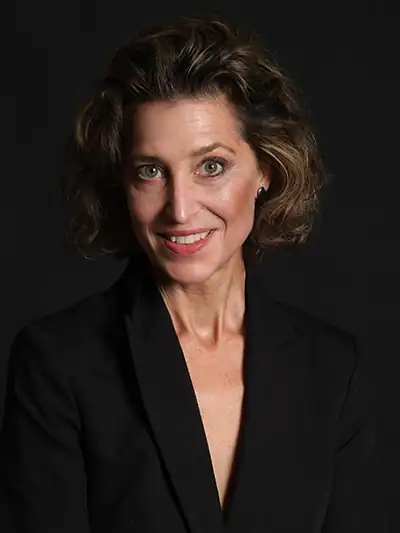
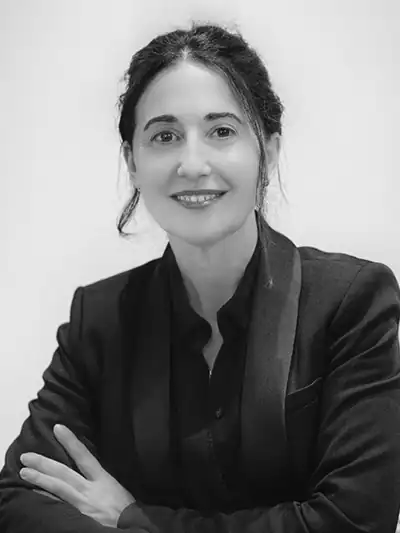
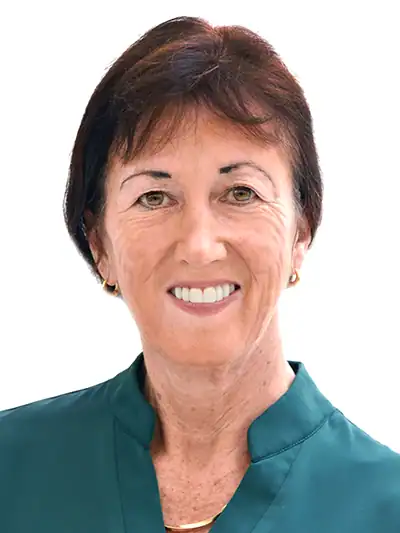
Creator of the AI Integration Roadmap, a structured framework for practical organisation-wide AI adoption, Fiona Passantino is the speaker we recommend most often when a leadership team has approved an AI strategy that the non-technical workforce cannot act on.
Author of AI-Powered Professional (2025) and AI-Powered Leader (2026), the latest in her Comic Books for Executives series, her Handbook for Post-Covid Engagement won the 2023 UK Business Book Awards and a Goody Award for Thought Leadership.
With an MBA in Management with an AI concentration from the University of Amsterdam and 15 years in corporate HR and internal communications at Danone, Philips, NN-Group, PostNL and Achmea, Fiona’s talks are built for the audience she came from.
She is a TEDx speaker, has addressed events for the European Commission, Business Insider and Vodafone, and delivers talks in English, Dutch and Italian.
Audiences come away with:
- a clear mental model of how AI applies to non-technical roles and everyday workflows (reducing anxiety and increasing practical confidence),
- working familiarity with the AI Integration Roadmap and how to begin applying it within their own team, and
- practical strategies for managing employee resistance and uneven adoption across a workforce.
Best for HR directors and people teams leading AI adoption initiatives, internal communications and employee engagement leads managing AI change programmes, L&D professionals designing AI upskilling curricula, and senior leadership teams navigating the cultural challenges of organisation-wide AI integration.
Allister Frost
Microsoft’s first Head of Digital Marketing Strategy (responsible for global Windows and Office launch campaigns including “I’M A PC”), and a former Kimberly-Clark marketing leader for Andrex, Kleenex and Huggies, Allister Frost brings a strong understanding of how change actually occurs inside large workforces.
Author of ReadyAlready: The Future-Ready Mindset to Keep Up, Stand Out, and Shape What’s Next, a Cannes Silver Direct Lion winner, twice winner of the Lester Wunderman Award for Outstanding Creative Work, a Chartered Marketer and Elected Fellow of the Chartered Institute of Marketing, he was named UK Digital Marketing Personality of the Year in 2013 and 2019, and won The Speaker Awards 2023.
Allister’s talks are particularly well-suited to all-hands and town-hall formats where the audience is tired of change programmes. He gives teams:
- a shared vocabulary for naming and working through change fatigue,
- his ReadyAlready Growth Cycle as a usable framework,
- a clearer view of which human capabilities still matter as AI absorbs more of the work, and
- re-energised commitment to the next phase of transformation.
Best for CHROs and internal communications leads planning all-hands and culture moments, transformation and change leaders preparing workforces for AI adoption, C-suite teams running annual kickoffs, and CMOs rebuilding marketing function capability.
Diana Verde Nieto
Co-founder and CEO of Edify Collective, an AI-native frontline performance support platform that embeds policies, SOPs and brand standards directly into the daily flow of work, Diana Verde Nieto is one of the few AI speakers whose central thesis sits at the join between boardroom decision and frontline behaviour.
Co-founder of Positive Luxury (2011), where she created the Butterfly Mark, the luxury sector’s best-known independent ESG certification which is now awarded on demonstrated performance across nine criteria and re-earned every two years by over 100 brands across fashion, beauty, jewellery and travel. Also founder of Clownfish (2002), one of the world’s first dedicated sustainability communications consultancies, scaled to five markets and sold to Aegis-Dentsu in 2008.
Author of Reimagining Luxury: Building a Sustainable Future for Your Brand (Kogan Page, 2024), shortlisted for the Business Book Awards 2025 (Change and Sustainability category), with primary research drawn directly from the Chief Sustainability Officers of LVMH, Kering and L’Oréal.
Diana is also a World Economic Forum Young Global Leader; Non-Executive Director at the British Beauty Council and Watts 1874; and former adviser to the UN Department of Economic and Social Affairs.
Her talks give audiences:
- a working definition of “The Action Gap”; the space between board-level commitments and frontline reality, and the operating disciplines that close it,
- a direct view of how LVMH, Kering and L’Oréal turn strategy into auditable commercial reality, and
- a reframing of AI in the workforce from substitution to augmentation: what it means to put expert-level judgement into the hands of frontline workers in real time.
Best for CEOs and brand leaders responsible for bridging strategic intent and daily operational reality, COOs and Chief Transformation Officers redesigning legacy systems for an AI-native workforce, and boards whose governance responsibilities turn on whether operational substance backs board-level commitments.
Jennifer Vessels
Jennifer Vessels is the CEO of Next Step, a Silicon Valley consulting firm leading business transformation for global enterprises since 2006, and founder of the Executive Growth Alliance; a global peer community of Fortune 100 leaders focused on future-of-work and AI adoption.
Creator of the P.E.A.C.E. Framework (Purpose, Exploration, Action, Collaboration, Empowerment), which has been deployed across organisations including Adobe, Cisco, Google, IKEA, Microsoft, Novartis, and Schneider Electric, she was named “Best Technology Speaker ’24” by IOFM/Diversified Communications. Author of No Clue, No Fear: Navigating Storms of Change and How Leaders are REALLY Winning with Technology, with media features in the World Economic Forum, the Institute of Directors, and The New York Times.
Jennifer’s talks give leaders:
- a structured framework (P.E.A.C.E.) for repeating change leadership,
- clearer understanding of why AI adoption and transformation programmes stall at the leadership level,
- practical tools for integrating generational diversity; particularly Gen Z talent alongside experienced human capital and AI capability, and
- a mindset shift from managing disruption defensively to positioning it as competitive advantage.
Best for CEOs and senior leadership teams navigating business model transformation or AI adoption programmes, CHROs managing generational integration and workforce redesign, and transformation leads inside large multinational organisations.
Rahaf Harfoush
Executive Director of the Red Thread Institute of Digital Culture and a member of the UN Secretary-General’s High-Level Advisory Body on Artificial Intelligence, Rahaf Harfoush is one of the most-credentialed voices on the cultural and behavioural consequences of AI inside organisations.
A member of France’s National Digital Council and Visiting Policy Fellow at the Oxford Internet Institute, she is a Research Affiliate at the Minderoo Centre for Technology and Democracy, University of Cambridge.
Rahaf is also co-author of The Decoded Company (a New York Times and USA Today bestseller and 2015 Gold Axiom Award for Best Business Technology Book) and author of Hustle & Float (2019), and is named to the Thinkers50 2025 ranking.
Faculty at Sciences Po’s School of Management and Innovation in Paris, Rahaf’s talks give C-suite leadership teams:
- a working framework for understanding what AI is actually doing to people in their organisation beyond productivity metrics,
- language for the cultural and cognitive shifts leaders are already sensing but have not been able to name, and
- a clearer position on AI governance grounded in research and lived policy experience at the UN and national level.
Best for C-suite teams who want to think clearly about AI before committing to a strategy, CHROs facing the talent, learning and creative-performance consequences of AI adoption, government and policy audiences working on AI governance, and innovation, foresight and strategy functions.
Andrew & Gaia Grant
A husband-and-wife speaking duo, Andrew Grant and Dr Gaia Grant are co-authors of The Innovation Race: How to Change a Culture to Change the Game (Wiley, 2016) and the international bestseller Who Killed Creativity? (Wiley, 2012).
Gaia Grant is a PhD researcher and lecturer in the Discipline of Strategy, Innovation and Entrepreneurship at the University of Sydney Business School; Andrew Grant is founder and director of Tirian International Consultancy, a TEDx speaker with three decades of executive facilitation across more than 30 countries.
They are developers of the academically validated Innovation Climate Indicator (iCLi) and the Dynamic Polar Positioning (DPoP) framework, used with executive teams from Fortune 500 firms and government innovation programmes.
They have delivered keynotes at YPO Global Leadership Conference, the APEC CEO Summit, PwC’s US National Conference, Gartner ITxpo, TEDx and the Salesforce ANZ Roadshow, with clients including Google, Nestlé, Boeing, Disney, Salesforce, Citibank, Visa, Goldman Sachs, UBS and the UAE Prime Minister’s Office.
Their talks give leadership teams:
- a working vocabulary for the explore-preserve tension that surfaces in every AI and innovation programme,
- an honest read on where the organisation sits on innovation readiness (supported by the Innovation Climate Indicator), and
- a workable distinction between creative thinking and innovation execution.
Best for C-suite teams running concurrent AI adoption and core-business protection mandates, heads of innovation and strategy in large complex organisations, and executive education programmes needing academically defensible content.
Karl Lillrud
Founder of PodManager AI and previously founder of Pricelizer (named to CNBC’s 20 hottest startups list in 2015), Karl Lillrud is the author of nine books on AI and digital business, including You, Me and AI and AI, Your Second Brain: Evolve or Go Extinct.
A member of the Harvard Business Review Advisory Council since August 2024, a two-time TEDx speaker, and recognised across multiple years in Thinkers360’s AI thought-leader rankings and Global Gurus’ Top 30 Motivational Speakers list, Karl’s engagement list includes Volvo, Spotify, Klarna, H&M, AstraZeneca, Qliro, 3, Tele2 and TUI.
His talks deliver:
- a sharper read on which AI use cases move commercial metrics and which are theatre,
- a vocabulary for discussing AI’s second-order effects on customers, employees and brand trust at board level,
- concrete reference points from operators who have shipped AI inside consumer-facing businesses, and
- the confidence to challenge vendor narratives and refocus internal AI portfolios on revenue impact.
Best for boards and executive committees moving from AI strategy approval to execution, CEOs, CMOs and chief digital officers in retail, telecoms, and consumer brands, and innovation and AI leads inside large enterprises building the operating model.
Carl Frey
Dieter Schwarz Associate Professor of AI & Work at the Oxford Internet Institute and Director of the Future of Work Programme at the Oxford Martin School, Carl Frey is the co-author of one of the most-cited social-science papers of the past two decades, “The Future of Employment” (2013, with Michael Osborne), which has over 20,000 citations on Google Scholar and whose methodology was adopted by Obama’s Council of Economic Advisors, the World Bank, and the Bank of England.
Author of The Technology Trap (Princeton University Press, 2019), a Financial Times Best Book of the Year and winner of the Richard A. Lester Prize, and How Progress Ends (Princeton University Press, 2025), shortlisted for the FT/Schroders Business Book of the Year Award.
An advisor to the G20, OECD, European Commission, and UN, with a previous role on the OECD Global Partnership on AI, Carl’s talks are designed for boards and C-suite leadership teams making evidence-based decisions on AI investment and long-term workforce strategy.
Audiences come away with:
- a historically grounded framework for distinguishing automation that displaces workers from technology that expands what workers can do,
- a working understanding of the “technology trap” mechanism, and concrete criteria for evaluating workforce and
- AI investment decisions against historical patterns of disruption.
Best for boards navigating long-term workforce strategy, CHROs developing evidence-based workforce planning, policy and public affairs functions in sectors facing direct automation exposure, and strategy and scenario planning teams.
Section 4: The future of AI and emerging technology
Speakers in this section are popular with audiences who need to think 1-3 planning cycles ahead; strategy teams, foresight functions, scenario planning teams, and any leadership team where the question is “what’s coming next, and what should we be preparing for now?”


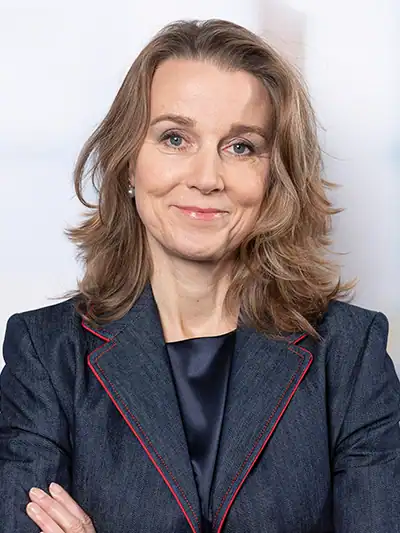

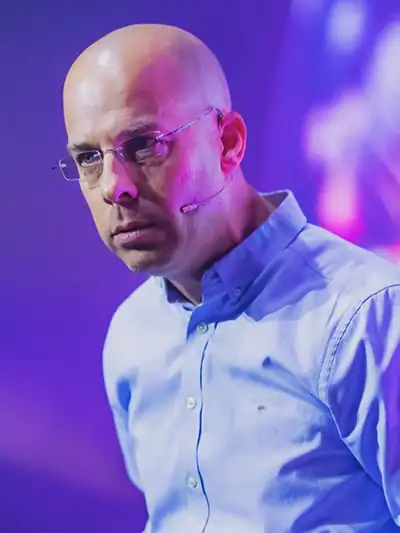
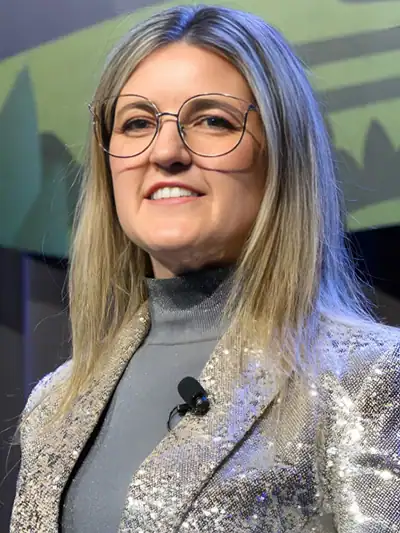


Nina Schick
Author of Deepfakes: The Coming Infocalypse (Hachette/Twelve, 2020), translated into multiple languages and widely cited as the first book on AI-generated content, Nina Schick has briefed US President Joe Biden and advised former NATO Secretary General Anders Fogh Rasmussen as Director of Rasmussen Global.
She worked on Emmanuel Macron’s 2017 presidential campaign and advised on the Democracy Perception Index, the largest annual study on global attitudes toward democracy.
She is founder of Tamang Ventures, an advisor to Synthesia (valued at $4B in its January 2026 Series E), a founding AI Council member at Qlik, and an advisor to Truepic.
A strategic analyst contributor across CNN, Bloomberg, and Sky News during a decade of European political crises. Half-Nepalese and half-German, with degrees from the University of Cambridge and University College London, now based in the United States.
Nina’s talks give boards and C-suite teams:
- a clear thesis about why AI is an infrastructure and energy contest rather than only a software adoption question,
- a working frame for assessing corporate exposure to compute, semiconductor and energy supply constraints, and
- specific examples of how policy, defence and frontier AI companies are operating inside what she calls the Industrial Intelligence framework.
Best for boards recalibrating long-range AI investment around infrastructure rather than tooling, CIOs and chief data officers needing a geopolitical lens on supply and dependency risk, defence and public sector audiences, and investor and capital allocator audiences pricing AI exposure.
Jim Carroll
Named by BusinessWeek as one of 4 leading sources of insight on innovation and creativity, with a Lifetime Achievement Award from the Canadian New Media Awards for pioneering work in the digital industry, Jim Carroll’s keynote engagement list – NASA, Walt Disney Company, Pfizer, the World Bank, the PGA of America, Mercedes-Benz, Microsoft, BlackRock, the Swiss Innovation Forum, the World Government Summit – illustrates how he is engaged: as a headline futurist with the range to handle very different sectors.
Author of titles including The Future Belongs To Those Who Are Fast, Think Big, Start Small, Scale Fast, and Dancing in the Rain: How Bold Leaders Grow Stronger in Stormy Times, and former national columnist for the Globe and Mail, Jim’s talks deliver:
- a clearer view of which trends in the audience’s specific industry are accelerating, which are overhyped, and which are mispriced by current strategy,
- a sharper internal language for talking about decision speed, confidence to challenge planning cycles and capital allocation assumptions that quietly assume a slower world, and
- concrete reference points from named organisations.
Best for boards and executive committees setting 3-to-5 year strategy in industries facing structural disruption, CEOs and innovation leads commissioning offsites, and conference programmes for healthcare, manufacturing, energy, financial services, and technology.
Deborah Nas
Professor of Strategic Design for Technology-based Innovation at the Faculty of Industrial Design Engineering, TU Delft, and Initiative Lead and founder of the Centre for Quantum and Society at QuantumDelta NL, Deborah Nas brings a perspective particularly valuable for audiences working at the technology-adoption frontier.
Author of Design Things That Make Sense (BIS Publishers), a practitioner framework of 37 named design strategies for technology-based product innovation, and an investment committee member at InnovationQuarter Capital (€143 million deep tech fund), Deborah also serves on the supervisory board of Hardt Hyperloop, is visiting professor at Politecnico di Milano and has 16 years co-founding and running a strategic innovation agency.
Her talks give audiences a clear framework for understanding why technology-based products fail at adoption, and what design decisions change that outcome, working familiarity with the Tech Design Strategies methodology (24 strategies to strengthen product benefits and 13 to reduce user resistance), and the ability to separate technological capability from technology adoption as distinct strategic problems requiring different organisational responses.
Best for chief innovation officers and product strategy teams working with emerging technologies, boards making investment decisions on AI, quantum, or deep tech, corporate innovation functions examining why technology projects stall, and government and public sector bodies.
Daniel Trabucchi & Tommaso Buganza
A speaking duo from the School of Management at Politecnico di Milano, where Daniel Trabucchi is Associate Professor of Platform Thinking and Tommaso Buganza is Full Professor of Leadership & Innovation.
Co-founders and Scientific Directors of the Platform Thinking HUB within Politecnico’s Digital Innovation Observatories, and named to the Thinkers50 Radar Class of 2024 (shortlisted for the Thinkers50 Distinguished Achievement Award, Digital Thinking category).
Co-authors of Platform Thinking: Read the Past. Write the Future (Business Expert Press, 2023) shortlisted for the Business Book Awards 2024 and translated into Italian and Chinese, and The Digital Phoenix Effect (Platform Thinking Publishing, 2025).
They have published 100+ peer-reviewed articles in journals including the Journal of Product Innovation Management, Technovation, and Information Systems Journal.
Their talks are particularly well-suited to legacy organisations facing disruption from platform competitors. Audiences come away with a working definition of Platform Thinking and how it differs from conventional digital transformation advice, the Platform Thinking Matrix as a practical framework for identifying where platform mechanisms apply to existing business models, and real cases from established firms – Siemens, AXA, Eni, Domino’s – showing how legacy assets become platform advantages.
Best for Chief Strategy Officers and Chief Digital Officers leading platform transformation in established businesses, CEOs and boards of legacy organisations facing platform competitors, and executive MBA audiences focused on digital business model innovation.
Itai Green
Founder and CEO of Innovate Israel, Itai Green is one of the most active voices on corporate-startup engagement and open innovation.
Itai is co-Founder and CEO of Global Innovation & Strategy Consulting (since 2024), former Head of Business Development and Innovation at Amadeus IT Group Israel, former CEO of Maxtech Technologies, and a co-founder of JerusalemOnline.
He is also the author of Innovation or Elimination: Winning in a World of Constant Change. An Executive Playbook (Business Expert Press, 2026), and a keynote speaker at Economist summits (2018-2022), the UNWTO Tourism Startup Competition, and the Amcham Brazil CEO Forum.
Itai’s talks give Chief Innovation Officers and Heads of Corporate Venturing a working definition of what separates a functioning open innovation programme from scouting theatre, a clear map of how to engage with Israel’s startup ecosystem without burning internal credibility on dead-end pilots, and a perspective on where generative AI shifts the corporate-startup dynamic grounded in live client work.
Best for Chief Innovation Officers and Chief Strategy Officers building or resetting an open innovation function, executive committees in travel, insurance, pharma, retail, energy and banking evaluating engagement with Israel’s startup ecosystem, business development and R&D leaders with active scouting but no reliable path from pilot to deployment, and boards and CEO forums looking for an operator’s view on turning innovation spend into commercial growth.
Nikki Greenberg
Former Head of Technology Strategy (Real Estate) at QIC, where she led the digital transformation of a $22 billion real estate portfolio within a global investment manager with $70 billion AUM, Nikki Greenberg is one of the most operationally credentialed AI speakers working in physical-asset industries.
Founder and Global Ambassador of Women in PropTech, former three-term co-chair of the Urban Land Institute New York Technology & Innovation Council, and recognised as Speaker of the Year, Trends & Technologies category in 2025.
With a Bachelor of Architecture, Master of Architecture, and Master of International Business, and a career spanning architecture, development and technology strategy at Lendlease, Koichi Takada Architects, Greenland Australia and Brown Harris Stevens, her keynote engagements include Harvard Business School, Bank of America, Brookfield, UN-Habitat, the Smart City Expo World Congress, MIPIM and the National Association of Realtors.
Audiences come away with:
- her structured Five Step Future Ready Framework,
- a clearer understanding of how demographic shifts, AI, robotics and automation will affect demand for physical space, and
- a recalibrated sense of timeline; which technology trends require decisions now, and which can be monitored.
Best for C-suite leaders in real estate, construction, and asset management, CIOs in industries with significant physical infrastructure, industry associations and sector conferences where audiences need technology insight grounded in commercial reality, and leadership development programmes seeking a cross-industry perspective.
Christina Yan-Zhang
CEO of The Metaverse Institute and Co-Chair of the UN ITU Task Group on Pre-standardisation for the CitiVerse, Dr Christina Yan Zhang is one of the people actively writing the international standards for AI in cities, public services, and immersive environments; the framework that 30+ global authorities have shaped and that hundreds of cities are expected to align to before 2030.
Vice Chair of the UN ITU Metaverse Working Group on Sustainability, Accessibility and Inclusion, and author of the UN’s first approved technical report on People-Centred CitiVerse, which set out an 8-level entry framework for governments and operators moving into virtual environments.
Christina’s team at The Metaverse Institute produced Tampere Metaverse Vision 2040, the first people-centred metaverse strategy commissioned by a city government, subsequently published by the UN as a resource for other administrations.
Her PhD in 2012 was on digital twin applications for the construction industry, well before the term entered mainstream board conversations, and from 2013 to 2020 she was China Director for QS World University Rankings, building the firm’s China operation from scratch and sitting close to the universities, science parks and national labs that drove the country’s 13th Five-Year Plan in research and innovation.
Named to 100 Global Women in AI 2025 (announced at Davos), and advises the International Science Council’s Centre for Science Futures and The Economist Impact’s AI economy board.
Her talks give audiences:
- a working map of where UN ITU standards on AI and the CitiVerse are heading and what that means for their own roadmap,
- a clearer view of how digital twins move from technical pilot to citywide operating system,
- direct insight into China’s innovation engine, and
- a framework for testing whether their current AI and virtual-environment plans will hold up against emerging international standards.
Best for boards and C-suites setting AI, digital and immersive technology strategy, government and city leadership teams designing smart city or CitiVerse roadmaps, heads of innovation, digital and infrastructure inside regulated industries, and investors positioning capital around AI-powered urban and built-environment plays.
Kate Ancketill
CEO and founder of GDR Creative Intelligence, the London-based futures and innovation consultancy she founded in 1992, Kate Ancketill has delivered the headline trends keynote at the National Retail Federation Big Show in New York for ten consecutive years, the industry’s most-watched stage for what major retailers are about to commit to.
Winner of the 2025 Speaker Awards for Best AI & Future Technology Speaker, and named to BizTech Magazine’s Top 30 IT Influencers 2024, Kate’s client roster includes P&G, Tesco, Sephora, Microsoft, Google, Samsung, Moet Hennessy, Costa Coffee, Lego and the BBC, with the work grounded in weekly tracking of the innovations reshaping retail, hospitality, brand and technology, then translated into specific commercial implications for clients planning two and three product cycles out.
Retail and consumer industries run two clocks: the quarterly one governed by trading and conversion, and the three-to-five-year one on which AI, automation and Gen Z consumer behaviour are rewriting the operating model.
Boards are being asked to commit capital against the second clock with the analytical habits of the first; Kate has spent 25 years helping organisations reconcile the two.
Her talks give audiences:
- a clear understanding on which retail and consumer innovations are signal and which are noise,
- specific case examples of how named global brands are already deploying AI in customer-facing roles,
- a working 3-to-5 year horizon for board and CMO planning (not a ten-year futurology piece), and
- a sharper view of Gen Z and Generation Alpha as commercial customers rather than demographic abstractions.
Best for retail, consumer goods and hospitality boards making three-to-five-year capital and format decisions, CMOs and customer experience leaders rebuilding brand and CX around AI, innovation and strategy leads inside major consumer brands, and conferences where the audience is operators (not technologists) but the agenda is technology-driven.
Section 5: AI for marketing, CX, and commercial functions
Speakers in this section work closely with marketing and customer-experience leadership – CMOs, Chief Customer Officers, brand directors, and any commercial team where AI is now reshaping how customers are reached, served, and retained.




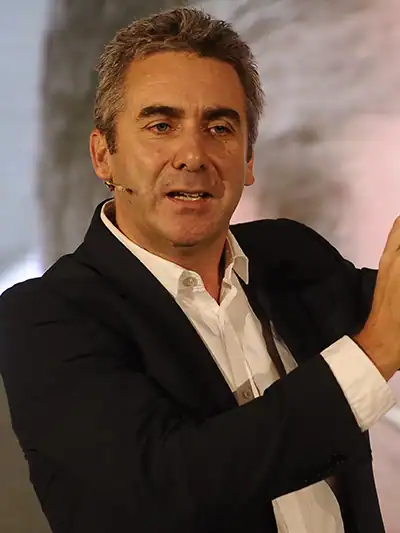

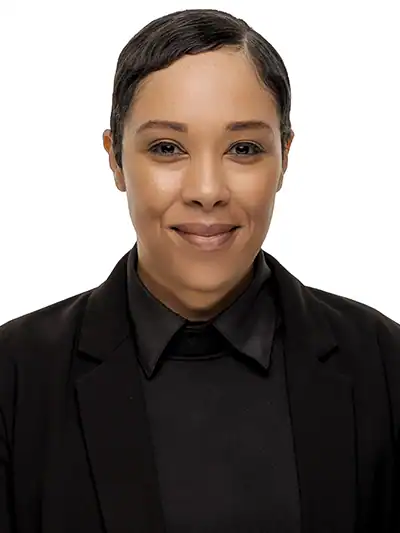
Blake Morgan
Author of 3 books on customer experience; More Is More (2017), The Customer of the Future (2019) and The 8 Laws of Customer-Focused Leadership (2024), Blake Morgan is one of the most-cited speakers on AI’s impact on customer experience working today.
The Customer of the Future was listed by Business Insider among the top 20 books executives were reading during the COVID period, and placed on Book Authority’s Top 100 Future of Technology Books of All Time.
Blake is also a Senior Contributor to Forbes with additional bylines in Harvard Business Review and Hemispheres magazine, host of The Modern Customer Podcast, and guest lecturer at Columbia University and UC San Diego. She has also been dubbed “The Queen of CX” by Meta and is a LinkedIn Top Voice, named one of the Top 40 female keynote speakers by Real Leaders.
Her talks give Chief Customer Officers:
- a usable framework for turning customer experience from a strategic slogan into a daily operating decision,
- specific examples from companies currently getting CX right and those getting it wrong (drawn from primary-source interviews), and
- a specific assessment of where AI genuinely improves customer experience and where it currently makes it worse.
Best for Chief Customer Officers and heads of customer experience operationalising CX strategy, senior leadership teams deciding how to integrate AI into customer-facing operations without eroding the brand, and CMOs moving their organisations from campaign-driven marketing to experience-driven growth.
Tom Roach
VP Brand Strategy at Jellyfish, part of The Brandtech Group, with a prior career across adam&eveDDB, BBH London, Leo Burnett and AMV BBDO, Tom Roach is the speaker we recommend most often when a marketing leadership team is trying to make sense of why performance-channel growth has flattened and what that means for brand investment in an AI-mediated discovery environment.
Originator (with econometrician Dr Grace Kite) of the “performance plateau” concept; the pattern where brands that concentrated investment in search, social and display find their growth curve flattening at exactly the moment leadership expected it to accelerate, and of “Bothism,” the framework for ending the false choice between brand and performance marketing.
As Head of Effectiveness at adam&eveDDB he worked directly alongside Les Binet, the most cited figure in marketing effectiveness research; before that, he spent seven years driving BBH London’s effectiveness practice to IPA Effectiveness Company of the Year status in 2018-19.
Tom also has multiple Gold IPA Effectiveness Awards across campaigns for McDonald’s, Sainsbury’s, John Lewis and Barclays, is a Marketing Week columnist and a regular speaker at Cannes Lions, SXSW, Google Firestarters and IPA Effweek.
His current work introduces “Share of Model”; a framework for how brands earn visibility inside AI-mediated search and discovery, where the audience never sees a SERP. His talks give audiences:
- a specific diagnostic for identifying whether their organisation has hit the performance plateau,
- a clearer commercial language for arguing brand investment to CFOs and boards, and
- practical thinking on what AI-mediated discovery means for brand visibility now.
Best for CMOs whose growth from performance channels is flattening, CFOs and senior leaders challenged to build the internal case for long-term brand investment, brand and performance teams operating in silos, and agency leadership working across integrated client portfolios.
Tom Goodwin
Author of Digital Darwinism: Survival of the Fittest in the Age of Business Disruption (Kogan Page, translated into several languages) and of the 2015 TechCrunch essay “The Battle Is For The Customer Interface” – one of the most widely cited descriptions of platform business models – Tom Goodwin is one of the few speakers in this guide who can connect marketing, technology, and business-model strategy without losing sight of what really matters to businesses.
He is the founder of innovation consultancy All We Have Is Now, where he advises Fortune 500 companies and startups, and was previously EVP and Head of Innovation at Zenith Media (part of Publicis Groupe), and SVP of Strategy and Innovation at Havas Media. He hosts The Edge, a technology series for Euronews, has been named LinkedIn’s #1 Voice in Marketing, and writes regularly for The Guardian, TechCrunch, Forbes, Adweek and Marketing Week.
His current argument runs against the prevailing mood: most organisations use new technology to make the old business run more smoothly, he contends, when the real opportunity is to rebuild what the business does. He calls the practical version of this “nowism”; the tools to grow already exist, and the limit is nerve and imagination. His sessions give marketing and leadership audiences:
- a way to judge which technologies actually change their business and which are noise,
- a concrete test for their own model (what the company would look like if it were built today),
- language to explain asset-light and platform competition to their teams and boards, and
- a more pragmatic read on AI that stays on what is usable today.
Best for CEOs and boards setting the direction of a digital or AI strategy, Chief Marketing and Chief Digital Officers deciding where technology changes the customer relationship, innovation, strategy and transformation leads under pressure to show a return on technology investment, and senior leadership teams at large incumbents facing platform-native competitors.
Mark Ritson
Founder of the MiniMBA in Marketing and the MiniMBA in Brand Management, programmes that have graduated more than 20,000 senior marketers globally, Mark Ritson is one of the most cited working voices on marketing strategy, brand management and pricing.
He holds a PhD in Marketing from Lancaster University, and his doctoral thesis won the 2000 Ferber Award as the best dissertation published in the Journal of Consumer Research; the first non-US recipient in the award’s history. He has held faculty positions at London Business School, the University of Minnesota, Melbourne Business School, MIT Sloan (visiting) and Singapore Management University (visiting), winning the MBA Best Teacher prize at all four.
From 2002 to 2015 he served as in-house brand consultant for LVMH, working directly with senior executives at Louis Vuitton, Dom Perignon and Hennessy. He has been a Marketing Week columnist for approximately twenty years, winning multiple PPA Business Columnist of the Year awards, the highest award for magazine journalism in the UK, and holds the AMI Sir Charles McGrath Award (the highest marketing honour in Australia) and an IPA Honorary Fellowship (2024). His co-authored pricing research was cited by Nobel Laureate George Akerlof in his 2001 acceptance speech.
In a guide focused on AI keynote speakers, Ritson’s role is the counterweight: he is the senior marketing voice CMOs use to frame AI inside the broader question of marketing accountability.
His talks give audiences:
- a working framework for connecting marketing strategy to commercial outcomes (the diagnosis-strategy-tactics model),
- clarity on the evidence base for brand building versus short-term performance marketing (and how to argue for the right balance internally), and
- sharpened understanding of pricing as a strategic rather than a tactical discipline.
Best for CMOs facing board-level scrutiny of marketing budgets, executive leadership teams seeking a commercial framework for evaluating marketing investment, organisations investing in marketing capability development at scale, and strategy and brand functions in consumer-facing businesses where the link between brand and revenue is contested.
Peter Fisk
Founder and CEO of GeniusWorks, a London-based strategy and innovation consultancy, and Professor of Leadership, Strategy and Innovation at IE Business School in Madrid (where he is academic director of the Global Advanced Management Program), Peter Fisk brings an unusually broad commercial lens to the AI-and-marketing conversation.
He is the former Chief Executive of the Chartered Institute of Marketing – the world’s largest professional marketing organisation – where he argued, against the institutional grain, that marketing, customer and innovation belong inside growth strategy rather than being managed as separate functions. He also previously served as Thinkers50 Global Director and founded the annual Thinkers50 European Business Forum, which has convened Michael Porter, Rita McGrath, Erin Meyer and Alex Osterwalder. It is a curatorial position rare for a working consultant; the frameworks in his talks are continually refreshed by direct contact with the academics and practitioners defining the field.
He is the author of nine business books, including Business Recoded (shortlisted for the CMI Management Book of the Year and reviewed by the Financial Times as “the book you have to read now”), Gamechangers and the Genius series, translated into 35 languages.
His talks give audiences:
- a shared vocabulary for the seven shifts that separate business reinvention from incremental change,
- case material from Asian innovators and global category leaders most leadership teams will not have seen,
- a connected view of innovation, customer and marketing strategy as one growth discipline, and
- specific direction on where to stop investing alongside where to grow.
Best for CEOs and boards facing slowing growth in mature markets, strategy and innovation leaders responsible for new business models or category growth, CMOs and customer experience leaders rethinking how marketing connects to commercial strategy, and executive leadership teams running annual strategy or transformation offsites.
Nathalie Nahai
Author of Webs of Influence: The Psychology of Online Persuasion (Pearson), translated into 7 languages and adopted by universities and Fortune 500 companies as a standard text on digital consumer behaviour, Nathalie Nahai is the speaker we recommend most often when a marketing leadership team wants a serious psychologically informed view of what AI and persuasive technology are doing to consumer trust.
Author of Business Unusual: Values, Uncertainty and the Psychology of Brand Resilience with named contributors including Dan Pink, Cindy Gallop and Amy C. Edmondson, she co-created TheValuesMap.com (2021) with Dr Kiki Leutner of Goldsmiths University. Nathalie is also guest faculty at ELISAVA’s Masters programme in Human Interaction and AI, where she teaches “Transversal Vision of Artificial Intelligence,” and a member of the BIMA Human Insights Council. Her work has been covered in The Wall Street Journal, Harvard Business Review, The Atlantic, Forbes, The Guardian and The Telegraph.
Her talks give CMOs:
- a working model for understanding how AI and persuasive technology affect consumer trust and decision-making (grounded in published research, not trend observation),
- practical application of self-determination theory and eudaimonic consumerism frameworks to brand and CX strategy, and
- a diagnostic approach to identifying where persuasive technology is eroding rather than building customer relationships.
Best for CMOs navigating the ethics and commercial implications of AI-driven personalisation, boards seeking a psychological framework for brand resilience, digital product teams applying persuasive design with ethical accountability, and strategy leads aligning organisational values with commercial outcomes.
Ashlea Atigolo
Co-founder of INATIGO, a generative AI venture builder, and co-founder of Finley AI (listed on the WealthTech100 2024), Ashlea Atigolo brings an unusually rare combination among AI speakers: an operator currently building AI products in regulated industries.
She is Managing Partner at Consult Venture Partners, advising executives on generative and agentic AI adoption, and was previously Co-Founder and Co-Managing Director of City Wharf Private Wealth, which was awarded Europe’s Most Innovative Wealth Management Model at the 2021 WealthBriefing European Awards. She has been listed on TechRound’s Top 64 Influential Women in UK Technology (2022) and named on the Fintech Powerlist, and is a regular speaker and host at Fintech Week London, Fintech Connect and the Chatbot Africa AI Summit.
Ashlea’s talks give audiences:
- a clearer picture of where generative and agentic AI is genuinely production-ready in regulated industries (and where it is not),
- a working vocabulary for governance conversations (agents, guardrails, oversight, human-in-the-loop),
- a view of how a builder – not a vendor – sequences AI adoption inside a regulated business, and
- named examples of fintech and wealth-management deployments that buyers can take into their own strategy conversations.
Best for boards and executive committees in financial services, wealth management, private equity and fintech, CIO, CTO and Head of Innovation audiences moving from AI pilots into operating deployment, fintech and AI conferences looking for an operator-speaker rather than a commentator, and internal AI summits and women-in-tech programmes.
How to brief us once you’ve shortlisted
When you contact us about any of the speakers in this guide, the things that help us match the speaker to the brief fastest are:
- The audience: their seniority, function, sector, and how much AI they have already absorbed
- The decision or outcome: what should the audience be ready to do, decide, or feel differently about after the session?
- The format: keynote, fireside chat, panel moderation, half-day workshop, executive briefing
- The location and date (with flex if possible – many of the speakers in this guide travel internationally but availability shapes lead times)
- The budget band: helps us recommend the right combination of speaker and format
If you are early in the planning and not sure which programme type your event sits in, we can usually narrow the right shortlist in a 15-minute call. Most of our AI speaker bookings start with that type of conversation, rather than with a name.
Frequently asked questions about booking an AI keynote speaker
How much does an AI keynote speaker cost in 2026?
AI keynote speaker fees in 2026 typically fall into four bands. Emerging voices and regional specialists range from $5,000 to $10,000. Established speakers with a published book or specific operating credential – the band where most corporate keynote work happens – range from $10,000 to $25,000. Recognised names with a research base and global track record fall between $25,000 and $50,000. Headline names (former Google / OpenAI executives, government leaders, bestselling authors with mass-market recognition) sit at $50,000 and above, usually reserved for flagship events where the speaker is the headline.
What’s the difference between an AI strategy speaker and an AI futurist?
An AI strategy speaker works with executive committees and boards on capital allocation, governance, and operational deployment decisions; the brief is usually “help us think clearly about what we are committing to.” An AI futurist works on 3-to-5 year horizon questions about where the technology is heading.
Strategy speakers tend to have operator credentials (ex-CIO, former Chief Data Officer, regulator). Futurists tend to have research, publishing, or media credentials. The two are not interchangeable; booking a futurist for a strategy session, or a strategy speaker for an innovation offsite, is one of the most common mistakes we see.
How far in advance should I book an AI keynote speaker for 2026?
Lead times vary by tier. Speakers in the $5,000-$25,000 band can often be confirmed 4 to 6 weeks out for non-flagship dates, and sometimes even more quickly. Speakers in the $25,000 to $50,000 band typically need 1 to 2 months of lead time. Headline speakers ($50,000+) are often booked 6 to 12 months in advance for flagship corporate events. Major industry weeks (Davos, Cannes Lions, CES) affect availability significantly; start the conversation as early as possible.
What should I ask to check whether an AI speaker is still current?
Ask to see a talk video from the past 6 months, not their highlights reel. AI as a topic has moved fast; material that worked in 2022 lands flat in 2026 with audiences who have run their own pilots. Ask what they have changed in their talk in the past year, and what the Q-and-A section typically focuses on. A speaker who can describe the questions their audiences are now asking – rather than the questions they were asking 18 months ago – is current.
Do I need a speaker who can deliver in multiple languages?
If your audience is genuinely multilingual, yes – but most of the time, the right choice is a strong English-language speaker with simultaneous interpretation arranged by the event. Speakers who deliver natively in two or more languages are rare and command a premium. Speakers Associates can advise on which speakers in our roster work in which languages. For example, both Miriam Meckel and Lea Steinacker can deliver in German and English, Fiona Passantino can deliver in English, Dutch and Italian, and Diana Verde Nieto in English and Spanish.
What’s the most common mistake event teams make booking an AI speaker?
Building the brief around a name rather than around the decision. A senior internal sponsor names a speaker they admire, usually from a podcast, a book they read, or a TED talk a colleague forwarded and the brief gets built around that name. Two weeks before the event, someone notices that the audience is not the audience that speaker is built for. The right sequence is: define the decision the audience needs to walk away ready to make > identify which of the five AI conversations that maps to > shortlist 3-5 speakers in that space > check fees, availability, and recent talk videos > select your speaker.
Can I see an AI keynote speaker before I book?
Yes. Every speaker in this guide has a recent talk video available. We can also arrange a 20-minute briefing call before contract; this is standard and we strongly recommend it.
Related topic hubs
- Artificial Intelligence & Generative AI speakers – Our full roster of speakers covering AI strategy, deployment, and adoption, including everyone featured in this guide and many others.
- AI Ethics & Responsible Technology speakers – Speakers focused on AI governance, regulation, accountability, and responsible deployment in regulated industries.
- Automation & Robotics speakers – Speakers covering automation, robotics, and the operational future of work.
- Future of Technology speakers – Speakers on the broader technology landscape: AI, quantum, immersive computing, biotech, climate tech.
- Digital Transformation speakers – Speakers on enterprise transformation programmes, where AI is one strand of a broader change agenda.
- Future of Work speakers – Speakers on workforce, talent, and the changing nature of work, including AI’s impact on jobs and skills.